Choosing the perfect hair dryer can feel like a daunting task, with countless models promising salon-quality results. But beyond fancy features and sleek designs, one specification stands out as truly fundamental: wattage. Have you ever wondered what those numbers like 1600W or 2000W actually mean for your hair? As an experienced technician with over a decade in the haircare industry, I’ve seen firsthand how the right wattage can transform your drying routine, while the wrong one can lead to frustration or even damage. This comprehensive guide will demystify hair dryer wattage, helping you understand its impact on performance, energy consumption, and how to select the ideal power level for your unique hair type and styling needs. Get ready to uncover the secret to faster, healthier drying and finally choose a hair dryer that truly works for you.
What is Hair Dryer Wattage, and Why Does It Matter?
At its core, hair dryer wattage is a measurement of the electrical power the appliance consumes during operation. Think of it as the engine’s horsepower for your hair dryer. A higher wattage generally indicates a more powerful motor, which in turn translates to increased heat output and stronger airflow. These two factors are critical for how quickly and effectively your hair dries. When a hair dryer boasts a higher wattage, it can generate more intense heat and move a greater volume of air, leading to significantly faster drying times. Conversely, a lower wattage dryer will typically produce less heat and gentler airflow, extending the drying process. Understanding this fundamental relationship is key to making an informed decision about your next hair dryer, as it directly influences not only styling results but also your morning routine’s efficiency.
Understanding Different Hair Dryer Wattage Ranges
Hair dryers come in a variety of wattage ranges, each designed to cater to specific needs and hair types. Knowing these categories can help you narrow down your choices and find a dryer that offers the right balance of speed and protection.
Low Wattage (800W – 1400W)
|
Our Picks for the Best Hair Dryer in 2026
As an Amazon Associate I earn from qualifying purchases.
|
||
| Num | Product | Action |
|---|---|---|
| 1 | INFINITI PRO by CONAIR Hair Dryer, 1875W Blow Dryer with Diffuser and Concentrator Attachments, AC Motor with Ceramic Technology, 3 Heat & 2 Speed Settings, Plum |

|
| 2 | Conair Double Ceramic Hair Dryer - Blow Dryer with Ionic Conditioning - Includes Concentrator |
|
| 3 | Infiniti PRO CONAIR Hair Dryer with Diffuser, Professional AC Motor, Tourmaline Ceramic Technology Blow Dryer, Includes Concentrator and Blowout Brush, Amazon Exclusive, Gray |
|
| 4 | Wavytalk Hair Dryer, Blown Away Ionic Hair Dryer for Curly Hair with Diffuser, 1875W Fast Drying Blow Dryer with Ceramic Technology, 3 Attachments for All Hair Types, Light and Quiet, Rose Gold |
|
| 5 | Wavytalk Hair Dryer with Diffuser, Blown Away Ionic Hair Dryer for Curly Hair with Comb, 1875W Fast Drying Blow Dryer with Ceramic Technology, 3 Attachments for All Hair Types, Light and Quiet, Black |
|
| 6 | Wicked Glinda Hair Dryer with Diffuser from Conair - INFINITIPRO by CONAIR Hair Dryer with Ceramic Technology - Includes Diffuser and Concentrator |
|
| 7 | Conair Double Ceramic Hair Dryer, 1875W Blow Dryer with Diffuser and Concentrator, Ionic Conditioning, 3 Heat & 2 Speed Settings, Amazon Exclusive, White |
|
| 8 | Infiniti PRO CONAIR Hair Dryer with Diffuser and Concentrator, 1875W Style & Shine Blow Dryer with Tourmaline and Ionic Conditioning to Fight Frizz, 3 Heat & 2 Speed Settings, Blue |
|
| 9 | INFINITI PRO by CONAIR Hair Dryer, 1875W Blow Dryer with Diffuser and Concentrator, Ceramic Technology, 3 Heat & 2 Speed Settings, Cold Shot Button, Black |
|
| 10 | Wicked Elphaba Hair Dryer with Diffuser from Conair - INFINITIPRO by CONAIR Hair Dryer with Ceramic Technology - Includes Diffuser and Concentrator |
|
Hair dryers in this range are typically lighter, more compact, and often designed for travel or delicate hair. They produce less heat and a gentler airflow, which can be beneficial for fine, thin, or easily damaged hair types. While they take longer to dry hair, the reduced heat exposure minimizes the risk of heat damage. These models are also generally more energy-efficient, making them a good choice for those conscious about power consumption.
Medium Wattage (1400W – 1800W)
This is often considered the sweet spot for most users and hair types. Dryers in the medium wattage range offer a good balance of drying speed and heat control. They provide enough power for efficient drying without being overly harsh on the hair, striking a balance between performance and gentleness. This range is versatile and suitable for normal to medium-thick hair, offering reasonable drying times for daily styling without excessive heat.
High Wattage (1800W and Above)
Professional-grade and high-performance home hair dryers fall into this category, often exceeding 2000W and sometimes reaching up to 3500W. These powerful machines deliver strong airflow and high heat, making them ideal for individuals with thick, coarse, very long, or curly hair who need to dry their hair quickly. The increased power significantly reduces drying time, which can be a game-changer for those with a lot of hair to manage. However, users with finer hair should approach high-wattage dryers with caution, typically using lower heat settings to prevent damage.
Choosing the Right Wattage for Your Hair Type
Selecting the perfect hair dryer wattage is not a one-size-fits-all decision; it heavily depends on your unique hair characteristics. Matching the wattage to your hair type ensures optimal drying results while protecting your strands from unnecessary stress.
For Fine, Thin, or Damaged Hair
If your hair is fine, thin, or prone to damage, a lower wattage hair dryer (800W-1400W) is generally your best bet. The gentler heat and airflow minimize the risk of overheating and breakage, allowing for a slower, more controlled drying process. This approach helps maintain your hair’s delicate structure and natural moisture. Opting for a model with multiple heat and speed settings is also crucial, enabling you to use the lowest effective temperature.
For Thick, Coarse, or Curly Hair
Individuals with voluminous, thick, coarse, or curly hair will benefit most from a high-wattage hair dryer (1800W or above). The powerful motor and intense heat dramatically cut down drying time, which is essential for managing dense hair effectively. Faster drying means less overall heat exposure, reducing frizz and improving styling results for these hair types. Look for dryers with at least 1875W, and ideally over 2000W, to truly tackle thick locks.
For Normal to Medium Hair
For those with normal or medium-thick hair, a hair dryer in the 1500W-1875W range offers excellent versatility. This wattage provides a good balance of efficient drying without being too aggressive. It’s powerful enough to dry hair reasonably quickly but still offers enough control to prevent excessive heat. The ability to adjust heat and speed settings within this range will allow you to customize your drying experience based on your specific needs on any given day.
Beyond Wattage: Key Features to Consider
While wattage is paramount, a truly effective hair dryer combines appropriate power with intelligent design and advanced technologies. These additional features can significantly enhance your styling experience and hair health.
- Multiple Heat and Speed Settings: This is non-negotiable. Even with a high-wattage dryer, you won’t always need maximum power. Adjustable settings allow you to tailor the heat and airflow to different sections of your hair or different stages of the drying process, providing flexibility and preventing heat damage.
- Ionic Technology: Many modern hair dryers incorporate ionic technology, which releases negative ions to break down water molecules quickly. This results in faster drying, reduced frizz, and a smoother, shinier finish, making the drying process more efficient regardless of wattage.
- Ceramic and Tourmaline Elements: Ceramic and tourmaline components distribute heat more evenly and gently across the hair shaft. Ceramic elements help to dry hair from the inside out, reducing damage, while tourmaline generates more negative ions for an even smoother result. These technologies work synergistically with wattage to provide healthier drying.
- Weight and Ergonomics: A comfortable and lightweight hair dryer reduces arm fatigue, especially during longer styling sessions. Consider the balance and grip to ensure it feels good in your hand.
- Noise Level: Some powerful dryers can be quite loud. If noise is a concern, look for models specifically advertised as quiet or with noise-reducing technology.
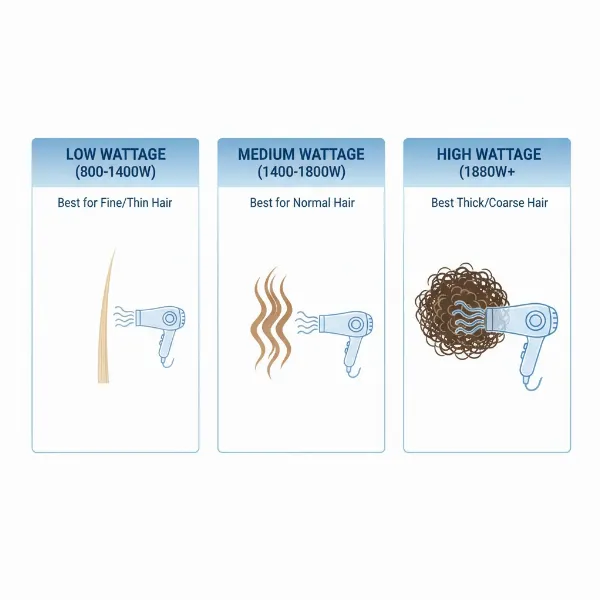 A diagram illustrating different wattage ranges of hair dryers and their suitability for various hair types, such as fine, thick, and normal hair.
Wattage and Energy Consumption: What It Means for Your Bill
Understanding your hair dryer’s wattage isn’t just about performance; it also has a direct impact on your electricity bill and environmental footprint. Hair dryers are among the most power-hungry appliances in many homes.
Generally, hair dryers use between 1,500 and 2,000 watts of electricity. To put this into perspective, if you use an average 1800-watt hair dryer for just 10 minutes every day, it can consume approximately 9.13 kilowatt-hours (kWh) of electricity per month, accumulating to roughly 109.5 kWh annually. The actual cost will depend on your local electricity rates, which vary significantly by region. However, consistently using a higher wattage dryer for extended periods will undoubtedly lead to higher energy consumption and a noticeable increase in your utility expenses. Opting for a lower wattage dryer or simply reducing your drying time can contribute to a more sustainable and cost-effective beauty routine.
Pro Tips for Optimal Hair Drying (Regardless of Wattage)
Even with the perfect wattage hair dryer, proper technique is essential to protect your hair and achieve the best results.
- Towel Dry First: Gently squeeze excess water from your hair with a microfiber towel before reaching for your dryer. This significantly reduces drying time, meaning less heat exposure.
- Apply Heat Protectant: Always use a heat protectant spray or serum. This creates a barrier between your hair and the heat, minimizing damage, especially with higher wattage dryers.
- Section Your Hair: Divide your hair into manageable sections. This allows you to dry each section thoroughly and evenly without over-drying others.
- Use the Right Nozzle: A concentrator nozzle directs airflow, making styling more precise and efficient. A diffuser is ideal for curly or wavy hair to maintain natural texture and reduce frizz.
- Start with Medium Heat, High Speed: Begin drying with a medium heat setting and a high fan speed. As your hair dries, you can lower the heat and speed for more control and to prevent over-drying.
- Finish with a Cool Shot: Once your hair is almost dry, use the “cool shot” button. This blast of cool air helps to seal the hair cuticles, setting your style and adding shine while reducing frizz.
- Keep Moving: Never hold the dryer in one spot for too long. Keep it moving continuously to prevent heat concentration and potential damage.
“Many people think ‘more power, faster dry,’ which is true to an extent. But the smartest drying happens when you match the wattage to your hair’s specific needs and use the variable settings strategically. It’s about efficiency and protection, not just raw power.” – Sarah Jenkins, Master Stylist & Hair Care Educator
Maintaining Your Hair Dryer for Longevity
Proper maintenance ensures your hair dryer performs optimally for years and helps maintain its efficiency, regardless of wattage.
- Clean the Air Filter: The most crucial maintenance step is regularly cleaning the air intake filter, usually located at the back of the dryer. Lint, dust, and hair can clog the filter, reducing airflow, causing the dryer to overheat, and potentially shortening its lifespan. Aim to clean it once a month, or more frequently if you use it daily.
- Store Properly: Avoid wrapping the cord tightly around the dryer, as this can damage the internal wiring. Instead, loosely coil the cord. Store your dryer in a dry, safe place where it won’t be dropped or jostled.
- Inspect the Cord: Periodically check the power cord for any fraying, cuts, or exposed wires. If you notice any damage, discontinue use immediately and have it professionally repaired or replaced.
Buying Guide: Wattage by Price Segment
Your budget often influences the features and wattage range available to you. Here’s a general guide to what you can expect across different price points.
Entry-Level / Budget-Friendly (Typically below $50)
In this segment, you’ll generally find hair dryers with wattages ranging from 1200W to 1800W. They offer basic functionality with fewer advanced features like ionic or ceramic technology. While they get the job done for most hair types, drying times might be slightly longer, and build quality may not be as robust as more expensive models. These are good for occasional use or for those with fine to normal hair who don’t require professional speed.
Mid-Range (Typically $50 – $150)
This segment offers an excellent balance of wattage, features, and durability. You’ll typically find dryers in the 1600W to 2000W range, often incorporating ionic, ceramic, or tourmaline technologies. These models provide faster drying times, better heat distribution, and multiple heat/speed settings, making them suitable for a wider range of hair types, including moderately thick hair. They represent a significant upgrade in performance and hair health benefits over budget options.
High-End / Professional (Typically $150 and above)
Premium hair dryers in this category often feature the highest wattages, from 1875W up to 3500W, combined with advanced motor technology (like brushless motors for longevity and quiet operation) and sophisticated heat control. Expect rapid drying, superior frizz control, lightweight designs, and exceptional durability. These are investments for professionals or individuals with very thick, challenging hair types who demand the absolute best performance and hair protection.
Conclusion
Choosing the right hair dryer wattage is far more intricate than simply picking the highest number; it’s about understanding your hair’s unique needs and finding the perfect balance between power, speed, and protection. From the gentle touch of a lower wattage dryer for fine strands to the robust force of a high-wattage model for thick locks, the ideal power output ensures efficient drying without compromising hair health. Remember to consider not only the wattage but also adjustable heat and speed settings, and beneficial technologies like ionic and ceramic. By making an informed choice, you’ll not only achieve your desired styles faster and more safely but also contribute to a more energy-efficient routine. So, what wattage will you choose to empower your perfect hair day?
Frequently Asked Questions
Is higher hair dryer wattage always better?
No, higher wattage isn’t always better. While it means faster drying due to more heat and stronger airflow, it can also cause excessive heat damage to fine, thin, or delicate hair. The “best” wattage depends on your hair type; fine hair benefits from lower wattage, while thick hair needs higher wattage for efficiency.
Can a lower-wattage hair dryer still dry thick hair effectively?
A lower-wattage hair dryer can dry thick hair, but it will take significantly longer. The reduced heat and airflow mean a more prolonged drying process, which can lead to increased overall heat exposure and potentially more frizz, making a higher-wattage model generally more suitable for thick hair.
How does hair dryer wattage affect energy consumption?
Hair dryer wattage directly correlates with energy consumption. Higher wattage means the dryer uses more electricity per minute of operation. For example, a 2000W dryer consumes more power than a 1000W dryer over the same duration, leading to higher electricity bills if used frequently.
What is a good all-around wattage for a hair dryer?
For most people with normal to medium-thick hair, a hair dryer in the 1500W to 1875W range is considered a good all-around choice. This range offers a balance of efficient drying speed and manageable heat output, providing versatility for daily styling without being too powerful or too slow.
Do professional hair dryers always have higher wattage?
Professional Hair Dryers typically do have higher wattages, often 1800W and above, sometimes reaching 3500W. This is because stylists need powerful, fast-acting tools for various hair types in a salon setting. However, “professional” also implies durability, advanced motor technology, and ergonomic design, not just wattage.