Navigating the world of hair care for black hair, especially resilient 4C textures, can be a journey of discovery. Your hair dryer isn’t just a tool for drying; it’s a vital instrument for maintaining hair health, enhancing manageability, and achieving desired styles without compromise. For those with tightly coiled, often fragile strands, selecting the right hair dryer is paramount to minimizing heat damage and preserving natural moisture. This comprehensive guide will illuminate the essential features, top technologies, and best practices to help you choose the perfect hair dryer to cherish your coils and curls.
Understanding 4C Hair and Its Unique Needs
4C hair is renowned for its tightly coiled, Z-patterned texture, which gives it incredible volume and versatility. However, this beautiful texture also makes it inherently fragile and prone to dryness and breakage due to the numerous bends in each strand. The unique structure of 4C hair means it can lose moisture quickly, and improper drying methods can lead to frizz, tangles, and heat damage. Therefore, a good hair dryer for 4C hair must prioritize gentle, efficient drying that minimizes heat exposure, enhances manageability by aiding in detangling and smoothing, and crucially, preserves the hair’s natural moisture balance. Choosing a specialized tool transforms the blow-drying process from a potential hazard into a beneficial step in your hair care routine, ensuring your coils remain hydrated, strong, and vibrant.
Types of Hair Dryer Technologies for Black Hair
The technology within a hair dryer can significantly impact its performance on black hair and 4C textures. Understanding these differences will empower you to make an informed choice that best suits your hair’s unique needs.
Ionic Hair Dryers
|
Our Picks for the Best Hair Dryer in 2026
As an Amazon Associate I earn from qualifying purchases.
|
||
| Num | Product | Action |
|---|---|---|
| 1 | INFINITI PRO by CONAIR Hair Dryer, 1875W Blow Dryer with Diffuser and Concentrator, Ceramic Technology, 3 Heat & 2 Speed Settings, Cold Shot Button, Black |

|
| 2 | Wicked Elphaba Hair Dryer with Diffuser from Conair - INFINITIPRO by CONAIR Hair Dryer with Ceramic Technology - Includes Diffuser and Concentrator |
|
| 3 | Conair Double Ceramic Hair Dryer, 1875W Blow Dryer with Diffuser and Concentrator, Ionic Conditioning, 3 Heat & 2 Speed Settings, Amazon Exclusive, White |
|
| 4 | Wicked Glinda Hair Dryer with Diffuser from Conair - INFINITIPRO by CONAIR Hair Dryer with Ceramic Technology - Includes Diffuser and Concentrator |
|
| 5 | Infiniti PRO CONAIR Hair Dryer with Diffuser, Professional AC Motor, Tourmaline Ceramic Technology Blow Dryer, Includes Concentrator and Blowout Brush, Amazon Exclusive, Gray |
|
| 6 | Conair Double Ceramic Hair Dryer - Blow Dryer with Ionic Conditioning - Includes Concentrator |
|
| 7 | Wavytalk Hair Dryer, Blown Away Ionic Hair Dryer for Curly Hair with Diffuser, 1875W Fast Drying Blow Dryer with Ceramic Technology, 3 Attachments for All Hair Types, Light and Quiet, Rose Gold |
|
| 8 | Wavytalk Hair Dryer with Diffuser, Blown Away Ionic Hair Dryer for Curly Hair with Comb, 1875W Fast Drying Blow Dryer with Ceramic Technology, 3 Attachments for All Hair Types, Light and Quiet, Black |
|
| 9 | INFINITI PRO by CONAIR Hair Dryer, 1875W Blow Dryer with Diffuser and Concentrator Attachments, AC Motor with Ceramic Technology, 3 Heat & 2 Speed Settings, Plum |
|
| 10 | Infiniti PRO CONAIR Hair Dryer with Diffuser and Concentrator, 1875W Style & Shine Blow Dryer with Tourmaline and Ionic Conditioning to Fight Frizz, 3 Heat & 2 Speed Settings, Blue |
|
Ionic hair dryers work by emitting negative ions, which interact with the positively charged water molecules on your hair. This process breaks down water molecules, allowing the hair to dry much faster while retaining essential moisture. For 4C hair, this is a game-changer, as it drastically reduces drying time and lessens the hair’s exposure to heat. The negative ions also help to smooth the hair’s cuticles, significantly reducing frizz and leaving your hair looking shinier and feeling softer. This technology is particularly beneficial for thick, frizz-prone hair, making it a popular choice for many with natural textures.
Ceramic Hair Dryers
Ceramic hair dryers are designed with ceramic-coated internal components or heating elements that ensure gentle, even heat distribution. Instead of blasting hair with intense heat, ceramic technology provides a consistent and regulated temperature, minimizing the risk of hot spots and potential damage. These dryers often emit infrared heat, which penetrates the hair shaft from the inside out, drying hair more delicately. Ceramic dryers are versatile and generally suitable for all hair types, including fine or fragile strands, helping hair retain its moisture and reducing the likelihood of damage.
Tourmaline Hair Dryers
Tourmaline hair dryers represent an advanced evolution, often combining the benefits of both ionic and ceramic technologies. Tourmaline is a semi-precious gemstone that, when crushed into a fine powder and integrated into the dryer’s components, naturally generates negative ions and far-infrared heat upon heating. This dual action allows for exceptionally fast drying times, reduced frizz, and enhanced shine, all while using lower heat settings. Tourmaline dryers are highly effective for thick, coarse, or curly hair, as they provide powerful, gentle drying that seals the hair cuticle, locks in moisture, and ensures extra smoothing and moisture retention.
Reverse-Air Dryers
A unique category, reverse-air dryers like the RevAir utilize a distinct technology that “sucks” hair into a wand, drying and straightening it with reverse airflow rather than traditional blowing. This innovative friction-free method is specifically designed for types 3 and 4 textures, offering exceptionally fast drying times (up to 70% faster) and significantly reducing damage and breakage compared to conventional blow dryers. With variable tension and heat settings, reverse-air dryers preserve the natural curl pattern while stretching and smoothing hair in a single step, providing a revolutionary solution for minimizing heat exposure and maintaining hair health.
Key Features to Look for in a Hair Dryer for 4C Hair
Selecting the ideal hair dryer goes beyond just brand names; it involves recognizing crucial features tailored to the unique needs of 4C hair. These elements contribute to a healthier, more efficient drying experience.
Multiple Heat and Speed Settings
Customization is critical for 4C hair. A high-quality hair dryer should offer several heat and speed settings, allowing you to tailor the airflow and temperature to your hair’s specific state and your styling goals. Starting with a low heat and high airflow setting is generally recommended to minimize damage, gradually increasing heat only if necessary as your hair dries. The ability to adjust these settings prevents excessive heat exposure, which is vital for protecting fragile 4C strands.
Powerful Motor and Wattage
A powerful motor with a higher wattage (e.g., 1875W or more) translates to stronger airflow and faster drying times. For dense 4C hair, quicker drying means less overall heat exposure, reducing the risk of damage. While high wattage is beneficial for efficiency, it’s essential to pair it with adjustable heat settings to ensure you’re not over-drying or exposing your hair to unnecessarily high temperatures. A robust motor also contributes to the longevity and durability of the hair dryer.
Essential Attachments
Attachments are non-negotiable for versatile and protective styling of 4C hair.
- Diffuser: This attachment spreads the dryer’s airflow gently and broadly, enhancing natural curl patterns and volume without causing frizz. It’s perfect for drying coils while maintaining their definition.
- Concentrator Nozzle: A concentrator focuses the airflow for precise styling, excellent for targeted drying, smoothing sections, or working close to the roots when aiming for a straighter look.
- Pik/Comb Attachment: Specifically designed for dense, coily hair, a pik attachment helps detangle, stretch, and elongate strands while drying, significantly reducing shrinkage and making the hair more manageable. Brands like Wahl are known for their powerful pik attachments, and Dyson offers a wide-tooth comb attachment suitable for Afro hair.
Cold Shot Button
A cold shot button is a simple yet effective feature that delivers a blast of cool air. Using it at the end of your drying session helps to seal the hair cuticles, lock in moisture, reduce frizz, and set your style, adding shine and longevity to your look.
Lightweight Design
Given the time and effort often required to dry and style 4C hair, a lightweight hair dryer can make a significant difference in user comfort and prevent arm fatigue. Look for ergonomic designs that are easy to maneuver, especially when working on different sections of your hair or when traveling.
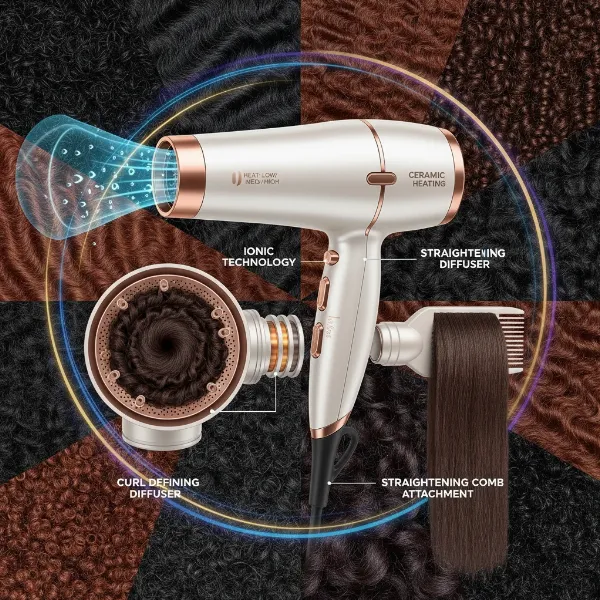 Essential features of hair dryers for 4C textures, including ionic, ceramic, diffuser, and comb attachments, symbolizing heat protection and curl definition
Top Recommended Hair Dryers for Black Hair and 4C Textures
Choosing the right hair dryer is an investment in your hair’s health and styling versatility. Here are some of the top contenders that cater specifically to the needs of black hair and 4C textures, offering a range of features and price points.
-
Dyson Supersonic Hair Dryer: Often hailed as a premium choice, the Dyson Supersonic is celebrated for its powerful digital motor and intelligent heat control technology, which prevents extreme heat damage by measuring air temperature 40 times per second. It comes with various magnetic attachments, including a diffuser and a wide-tooth comb (Afro comb), making it exceptionally versatile for different styles, from defined curls to stretched blowouts. Its lightweight and balanced design makes drying quicker and less strenuous. While expensive, many users with 4C hair attest to its efficiency and hair-health benefits.
-
RevAir Reverse-Air Hair Dryer: This innovative tool stands out with its reverse-air technology, which gently suctions hair into a wand to dry and stretch it simultaneously. Designed specifically for types 3 and 4 textures, the RevAir significantly reduces drying time and minimizes friction and heat damage, preserving the hair’s natural curl pattern. It offers multiple tension and heat settings, providing a truly customized drying experience. It’s an excellent investment for those prioritizing minimal heat exposure and breakage.
-
Wahl PowerPik 2 Hair Dryer: A long-standing favorite in Afro hair care, the Wahl PowerPik 2 is beloved for its powerful motor and robust pik attachment. This traditional blow dryer is designed to handle dense, ultra-coily hair, offering a durable and tangle-free drying and stretching experience. It’s an affordable and reliable option for achieving stretched styles, particularly for those who appreciate the efficacy of a classic pik dryer.
-
Revlon One-Step Hair Dryer and Styler: This popular paddle brush dryer combines a hair dryer and a styling brush into one tool, making it incredibly efficient for quickly straightening and smoothing 4C hair. Its flexible yet durable bristles help detangle coily textures as it dries, reducing frizz and cutting down styling time. It’s particularly favored by beginners for its ease of use and ability to deliver a frizz-free blowout.
-
BaByliss Hydro Fusion 2100 Hair Dryer: Known for its “nifty moisture-balancing ionic system,” this BaByliss dryer leverages negative ions to break up water molecules, preventing frizz and locking in moisture. Its ceramic technology ensures even heat distribution, making it effective for smoothing hair and reducing frizz without excessive effort. It’s a sturdy, mid-range option that offers good value and strong performance for managing frizz and leaving coils dry yet moisturized.
-
Shark FlexStyle Air Styler & Hair Dryer: This multi-styler offers five different attachments, including a diffuser, allowing for a versatile styling experience. It uses air and heat in tandem to minimize damage and avoids the “crispy feel” on kinks. It’s a great investment for those looking to downsize their hair tool kit and achieve various styles, from natural curls to voluminous blowouts, with less heat.
How to Properly Dry 4C Hair to Prevent Damage
Using the best hair dryer is only half the battle; proper technique is equally crucial for protecting your 4C hair from heat damage and ensuring healthy, beautiful results.
Preparation: Wash, Condition, and Heat Protectant
Start your drying process by washing and conditioning your hair with moisturizing products designed for curly or coily hair. After gently towel-drying (preferably with a microfiber towel to minimize frizz), apply a generous amount of leave-in conditioner or hair butter to nourish your strands. Crucially, always follow with a high-quality heat protectant spray. This creates a barrier between your hair and the heat, significantly reducing the risk of damage.
Sectioning and Detangling
4C hair is best worked in small, manageable sections. This allows for thorough drying and styling while preventing tangles and breakage. Use a wide-tooth comb or your fingers to gently detangle each section, starting from the ends and working your way up to the roots. Ensure your hair is mostly detangled before applying heat to prevent knots from becoming heat-set.
Drying Technique: Low Heat, Constant Movement, and Stretching
When blow-drying, begin with the lowest heat setting and a medium to high airflow. Keep the dryer moving constantly, avoiding concentrating heat on any single spot for too long. For stretching or elongating your coils, use a comb or pik attachment and gently pull each section taut as you dry it, moving from root to tip. If using a diffuser for curl definition, cup sections of hair in the diffuser and lift towards the scalp on a low-heat setting. Finish each section with a blast of cool air to seal the cuticle and lock in moisture.
> “The key to preserving 4C hair health during blow-drying lies in consistent, gentle movement with your dryer and never skipping heat protectant.” – Sarah Jenkins, Professional Stylist for Natural Hair
Frequency of Blow Drying
While blow drying can be beneficial for managing and styling 4C hair, moderation is key. Over-drying or frequent heat exposure can lead to dryness and breakage. It is generally recommended to limit blow-drying to once per week or less, depending on your hair’s overall health and moisture levels. Prioritizing air drying when possible, or using heatless stretching methods, can further minimize potential damage.
Tips for Maintaining Healthy 4C Hair (Beyond Drying)
Beyond the blow-drying process, a holistic approach to hair care is essential for nurturing resilient 4C textures.
- Moisturize Regularly: 4C hair is prone to dryness, so consistent moisture is vital. Use moisturizing shampoos, conditioners, leave-ins, and natural oils (like shea butter, coconut oil, or argan oil) to keep your hair hydrated and supple.
- Gentle Detangling: Always detangle your hair while damp, using a wide-tooth comb or your fingers, and working in small sections from ends to roots. This minimizes breakage and makes the process more manageable.
- Protective Styling: Incorporate protective styles like twists, braids, and updos to shield your ends from manipulation and environmental damage, promoting length retention.
- Deep Conditioning: Treat your 4C hair to regular deep conditioning treatments to replenish moisture and strengthen strands from within. Look for formulas rich in nourishing ingredients to hydrate and fortify your hair.
- Limit Excessive Heat: If you must use heat, always use a heat protectant and opt for the lowest effective temperature. Consider air drying when possible to give your hair a break from heat styling.
Buying Guide: Hair Dryer Price Segments
Hair dryers for black hair and 4C textures are available across various price points, each offering different levels of technology, durability, and features.
Budget-Friendly Options (Under $50)
This segment includes reliable, basic models that still offer essential features like multiple heat/speed settings and basic attachments. Brands like Wahl (e.g., PowerPik 2) often provide powerful performance with pik attachments, making them effective for stretching 4C hair without breaking the bank. While they might lack advanced technology or a sleek design, they can be a great entry point for effective drying. The Revlon One-Step Paddle Dryer can also sometimes be found in this range on sale.
Mid-Range Options ($50 – $200)
This category offers a sweet spot between affordability and advanced features. You’ll find dryers with ionic, ceramic, or tourmaline technologies that provide better heat distribution, frizz control, and faster drying times. Brands like BaByliss, Amika, and some Revlon models fall into this range, often including diffusers and concentrators. These dryers are a solid investment for enhanced hair health and styling versatility.
Premium/Luxury Options (Over $200)
At the higher end, you’ll find cutting-edge technology, superior build quality, and specialized features. This segment includes brands like Dyson, RevAir, and Shark FlexStyle. These dryers boast powerful, quiet motors, intelligent heat control, and a comprehensive range of attachments designed for specific hair needs, including Afro combs and reverse-air wands. While a significant investment, they offer unparalleled speed, damage prevention, and a luxurious user experience.
Conclusion
Choosing the best hair dryer for your black hair and 4C textures is a crucial step towards achieving your hair goals while prioritizing its health. By understanding the unique characteristics of 4C hair and the benefits of different technologies like ionic, ceramic, and tourmaline, you can select a tool that minimizes damage, maximizes moisture retention, and enhances manageability. Essential features such as multiple heat settings, powerful motors, and specialized attachments like diffusers and pik combs are key to a successful drying routine. Remember, proper technique, including heat protectant and gentle handling, is just as vital as the dryer itself. Investing wisely in the right hair dryer is an investment in the long-term vitality and beauty of your natural coils and curls. What specific styling challenge are you hoping to overcome with your new hair dryer?
Frequently Asked Questions
What type of hair dryer is best for 4C hair?
The best Hair Dryer for 4C hair typically features ionic, ceramic, or tourmaline technology, multiple heat and speed settings, and essential attachments like a diffuser or pik comb. These features work together to minimize heat damage, reduce frizz, and efficiently dry tightly coiled textures while preserving moisture and enhancing manageability.
How can I prevent heat damage on 4C hair when blow-drying?
To prevent heat damage on 4C hair, always apply a heat protectant before drying. Use low to medium heat settings with high airflow, and keep the dryer moving constantly to avoid concentrating heat on any one area. Section your hair and detangle gently, and consider finishing with a cool shot to seal the cuticles.
Does 4C hair need a diffuser?
Yes, a diffuser is highly beneficial for 4C hair. It spreads the airflow gently, helping to reduce frizz, preserve your natural curl pattern, and encourage definition without disturbing the hair’s texture. It ensures even drying and can significantly enhance the appearance of your coils.
What temperature should I use when drying 4C hair?
It’s generally recommended to use low to medium heat settings when drying 4C hair to prevent excessive heat exposure and moisture loss. Pair this with a high airflow to dry efficiently without over-drying. Always adjust based on your hair’s dampness and sensitivity.
Should I stretch 4C hair while blow-drying?
Stretching 4C hair while blow-drying can help reduce shrinkage and make styling easier. Using a comb or pik attachment to gently pull sections taut as you dry them can effectively elongate your coils. Ensure you’re using a heat protectant and low heat for this technique.