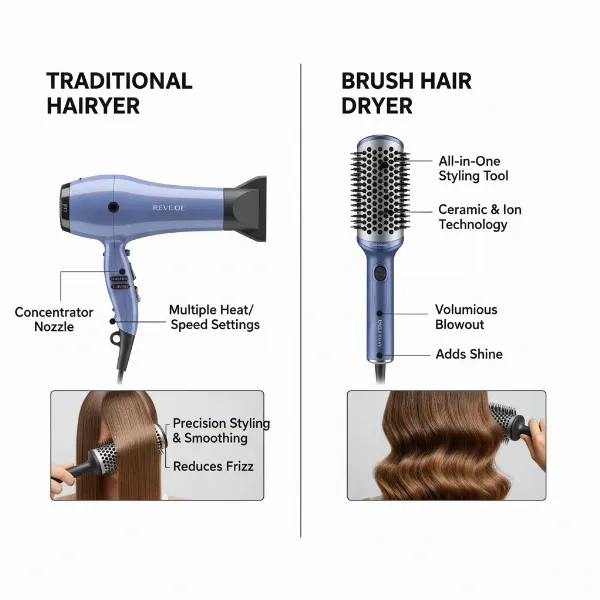
For many, styling hair is a daily ritual that boosts confidence and completes a look. However, if you live with arthritis or limited hand dexterity, this seemingly simple task can transform into a painful and frustrating ordeal. Traditional hair dryers, often heavy and unwieldy with small, difficult-to-operate buttons, can exacerbate joint pain, trigger fatigue, and make achieving your desired hairstyle a significant challenge. The good news is that advancements in design and technology have led to a new generation of lightweight, ergonomically sound hair dryers specifically crafted to minimize strain and maximize comfort for individuals with arthritic hands. This comprehensive guide will help you navigate the options and select the perfect hair dryer to reclaim the joy of effortless hair styling.
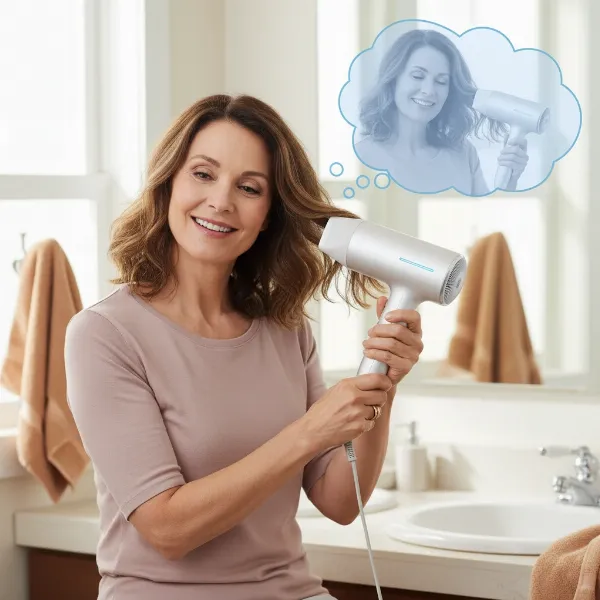 woman comfortably styling hair with lightweight dryer, overcoming arthritis pain
Choosing the Right Hair Dryer: A Comprehensive Guide for Arthritis Hands
|
Our Picks for the Best Hair Dryer in 2026
As an Amazon Associate I earn from qualifying purchases.
|
||
| Num | Product | Action |
|---|---|---|
| 1 | Conair Double Ceramic Hair Dryer, 1875W Blow Dryer with Diffuser and Concentrator, Ionic Conditioning, 3 Heat & 2 Speed Settings, Amazon Exclusive, White |

|
| 2 | Wicked Glinda Hair Dryer with Diffuser from Conair - INFINITIPRO by CONAIR Hair Dryer with Ceramic Technology - Includes Diffuser and Concentrator |
|
| 3 | INFINITI PRO by CONAIR Hair Dryer, 1875W Blow Dryer with Diffuser and Concentrator, Ceramic Technology, 3 Heat & 2 Speed Settings, Cold Shot Button, Black |
|
| 4 | INFINITI PRO by CONAIR Hair Dryer, 1875W Blow Dryer with Diffuser and Concentrator Attachments, AC Motor with Ceramic Technology, 3 Heat & 2 Speed Settings, Plum |
|
| 5 | Wavytalk Hair Dryer with Diffuser, Blown Away Ionic Hair Dryer for Curly Hair with Comb, 1875W Fast Drying Blow Dryer with Ceramic Technology, 3 Attachments for All Hair Types, Light and Quiet, Black |
|
| 6 | Infiniti PRO CONAIR Hair Dryer with Diffuser and Concentrator, 1875W Style & Shine Blow Dryer with Tourmaline and Ionic Conditioning to Fight Frizz, 3 Heat & 2 Speed Settings, Blue |
|
| 7 | Infiniti PRO CONAIR Hair Dryer with Diffuser, Professional AC Motor, Tourmaline Ceramic Technology Blow Dryer, Includes Concentrator and Blowout Brush, Amazon Exclusive, Gray |
|
| 8 | Conair Double Ceramic Hair Dryer - Blow Dryer with Ionic Conditioning - Includes Concentrator |
|
| 9 | Wavytalk Hair Dryer, Blown Away Ionic Hair Dryer for Curly Hair with Diffuser, 1875W Fast Drying Blow Dryer with Ceramic Technology, 3 Attachments for All Hair Types, Light and Quiet, Rose Gold |
|
| 10 | Wicked Elphaba Hair Dryer with Diffuser from Conair - INFINITIPRO by CONAIR Hair Dryer with Ceramic Technology - Includes Diffuser and Concentrator |
|
Selecting a hair dryer when you have arthritis means prioritizing features that reduce physical strain without sacrificing performance. The goal is to find a tool that feels like an extension of your hand, not a heavy burden. Key considerations include the dryer’s overall weight, the ergonomic design of its handle, the ease of its controls, and technologies that speed up drying time. By focusing on these elements, you can transform your hair care routine from a painful chore into a manageable and even enjoyable experience.
Understanding Popular Hair Dryer Types for Arthritis Sufferers
Different hair dryer technologies offer distinct benefits that can be particularly advantageous for individuals with arthritis, primarily by reducing drying time and minimizing frizz, thereby lessening the duration and effort required for styling.
- Ionic Hair Dryers: These dryers emit negative ions that break down water molecules on the hair faster, leading to quicker drying times and reduced frizz. For someone with arthritis, this means less time spent holding the dryer, directly reducing arm and wrist fatigue.
- Ceramic Hair Dryers: Ceramic-coated components distribute heat more evenly and gently across the hair. This consistent, less intense heat helps prevent damage, which is beneficial for all hair types but particularly for those who need a quicker, less strenuous drying process. The even heat means fewer passes are needed to dry hair effectively, further minimizing strain.
- Tourmaline Hair Dryers: Often paired with ceramic technology, tourmaline amplifies the production of negative ions, leading to even faster drying and a smoother, shinier finish. This combined technology is ideal for significantly cutting down styling time and effort for people with arthritis.
- Cordless Hair Dryers: While the concept of a cordless hair dryer offers maximum mobility, it’s crucial to evaluate their actual weight and power. Some cordless models might still be too heavy due to battery packs, or lack the wattage for efficient drying, which could prolong the styling process and increase strain. It’s essential to weigh their portability against their overall usability for arthritic hands.
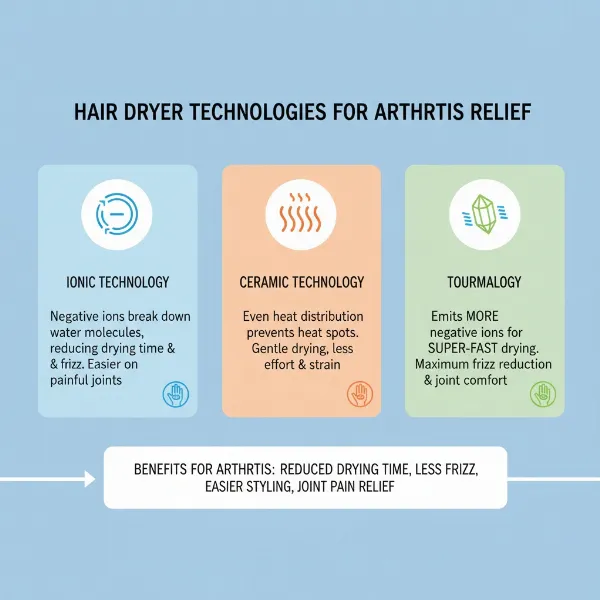 diagram illustrating ionic, ceramic, tourmaline hair dryer benefits
Key Considerations When Selecting a Hair Dryer for Arthritis Hands
When living with arthritis, the features of a hair dryer go beyond simple aesthetics or power. Thoughtful design can significantly impact comfort and ease of use, making your daily routine more manageable.
- Weight: This is arguably the most critical factor. An ideal arthritis-friendly hair dryer should weigh under 400 grams (0.88 pounds), with the best options often ranging from 250-380 grams (0.55-0.84 pounds). Lighter models, such as the Loveps (0.77 lbs/350g) and Cosy Companions (0.82 lbs/373g), dramatically reduce strain on hands, wrists, and shoulders during extended styling sessions.
- Ergonomics & Design: A well-designed handle is crucial for minimizing stress on your joints. Look for soft-touch, non-slip grips with balanced weight distribution that promote a natural holding position. Handle-less designs, like the KISS Handle-Less 1875W Ceramic Tourmaline Hair Dryer or the Paul Mitchell Neuro Grip, can offer revolutionary comfort for severe arthritis or significantly limited grip strength, allowing more versatile holding positions.
- Controls & Switches: Small, fiddly buttons can be a major source of frustration and pain. Prioritize dryers with large, accessible buttons or rocker switches that are easy to locate and press without requiring fine motor skills or significant finger pressure.
- Motor Type & Power: While lightweight, the dryer should still possess sufficient power to dry hair efficiently, reducing the overall time you need to hold the device. High-speed hair dryers with 100,000+ RPM brushless motors can cut drying time by up to 70%, greatly minimizing exposure to repetitive stress and joint strain. DC motors are often lighter than traditional AC motors.
- Heat & Speed Settings: Multiple heat and speed settings allow for customization, which is essential for managing hair types and sensitivity to heat. Easy-to-adjust settings mean you can quickly switch without struggle. A cool shot button that is easily accessible is also beneficial for setting styles without prolonged heat exposure.
- Noise Level: While not directly related to joint pain, a quieter operation can contribute to a more pleasant and less fatiguing experience, especially for those sensitive to noise.
- Cord: A swivel cord prevents tangling and reduces the need for awkward wrist movements. A sufficiently long cord also offers more flexibility and reduces pulling or stretching. Some models feature retractable cords, like the Conair 1875W Pink Hair Dryer, simplifying storage and reducing clutter.
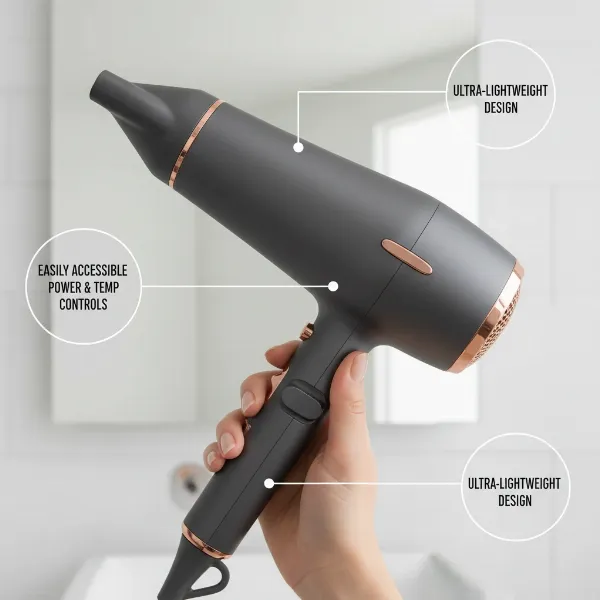 lightweight hair dryer highlighting ergonomic handle, large buttons
Comparison Table of Popular Lightweight Hair Dryers for Arthritis Hands
Choosing the best lightweight hair dryer involves weighing features, performance, and user-friendliness. Here’s a comparison of some models frequently recommended for individuals with arthritis, highlighting their unique benefits:
| Model | Weight (approx.) | Key Features | Pros | Cons | Price Segment |
|---|---|---|---|---|---|
| Loveps Hair Dryer | 0.77 lbs (350g) | 110,000 RPM brushless motor, Ionic, Magnetic nozzles, Quiet | Extremely lightweight, fast drying, easy magnetic attachments, quiet, customizable temperature | Might be less powerful for very thick hair | Mid-Range |
| Cosy Companions Hair Dryer | 0.82 lbs (373g) | 150,000 RPM brushless motor, Negative Ionic, Low noise, Magnetic attachments | Very lightweight, ergonomic grip, simple button controls, magnetic attachments, very quiet (51db) | Slightly heavier than Loveps | Mid-Range |
| Maxfoxe Ionic Hair Dryer | 0.82 lbs (373g) | High-speed brushless motor, Ionic, Magnetic nozzles, 4 temps & 3 speeds, Cold air button | Compact, ergonomic button placement, easy temp/speed control, magnetic attachments, long cord | Mid-Range | |
| Conair Travel Hair Dryer 1600W | 1 pound (0.45kg) | Dual voltage, folding handle, 2 heat/speed settings | Lightweight, compact, ergonomic, dual voltage for travel, simple controls | Limited heat settings, not for heavy styling jobs | Budget |
| KISS Handle-Less 1875W | 1 pound (0.45kg) | Ceramic Tourmaline, Handle-less design, Cool-touch nozzle, 3 attachments | Handle-less for versatile grip, lightweight, frizz-free results, cool-touch nozzle, fast drying | No traditional resting surface, may require adjustment to handle-less design | Mid-Range |
| Dyson Supersonic | (Not specified as primary feature) | Balanced design, powerful digital motor, intelligent heat control, magnetic attachments | Reduced wrist strain due to balanced design, very fast drying, gentle on hair | High price point | Premium |
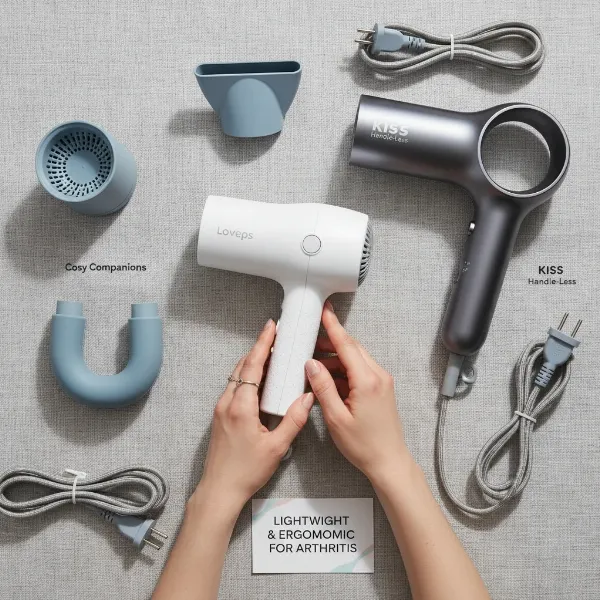 selection of ergonomic hair dryers for arthritis hands on display
How to Use a Hair Dryer Correctly with Arthritis
Adapting your hair drying technique can significantly reduce strain and discomfort. Integrating mindful practices into your routine is just as important as choosing the right tool.
- Pre-Drying: Thoroughly towel-dry your hair with a microfiber towel before using the dryer. This reduces the amount of moisture, minimizing the time you need to hold the dryer.
- Optimal Positioning: Sit at a table or vanity for stability and support, using a pillow or cushion to support your elbow. This reduces strain on your neck, shoulders, and arms.
- Hands-Free Options: Consider using a hair dryer stand (either tabletop or wall-mounted) to eliminate the need to hold the dryer at all, freeing both hands for styling.
- Sectioning: Work in small, manageable sections. This allows for quicker drying of each section, reducing continuous holding time and making the process less overwhelming.
- Short Breaks: Take mandatory 30-second breaks every 3-4 minutes of continuous use. Research shows that prolonged use of upper arm muscles can increase neck and shoulder pain.
- Gentle Movements: Use flowing motions instead of quick, jerky movements. Keep your wrists in a neutral position to avoid unnecessary strain.
- Lowest Effective Heat: Utilize the lowest effective heat setting to prevent overheating and potential discomfort. Many people with arthritis are sensitive to heat.
- Heat Protectant: Always apply a heat protectant spray to damp hair. This safeguards your hair, potentially reducing the need for multiple passes and excessive heat exposure.
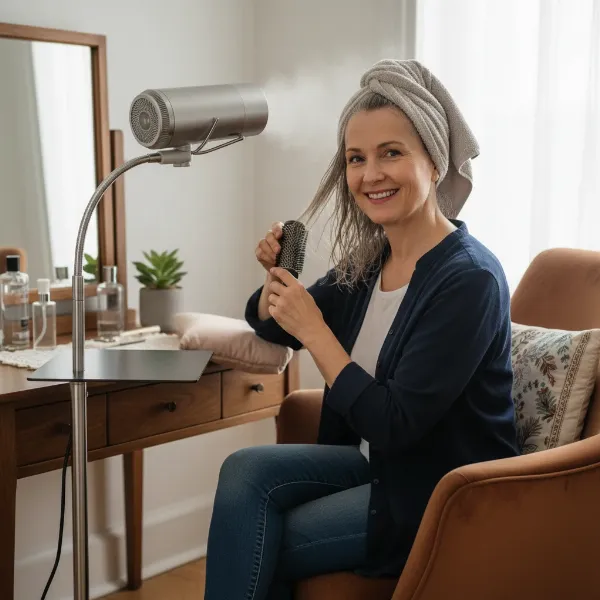 person using hands-free hair dryer stand with elbow support
Maintaining Your Hair Dryer for Longevity
Proper care for your lightweight hair dryer ensures its efficiency and extends its lifespan, which means less frequent replacement and continued comfort.
- Clean the Air Filter Regularly: A clogged filter restricts airflow, forcing the motor to work harder, which can lead to overheating and reduced efficiency. Most arthritis-friendly dryers have removable filters for easy cleaning, which is a key accessibility feature. Regularly clear lint and dust to maintain optimal performance and prevent motor strain.
- Proper Storage: Store your hair dryer in a way that avoids tangling the cord or placing stress on the handle. Models with folding handles or retractable cords simplify this, reducing clutter and potential damage.
- Inspect the Cord: Periodically check the power cord for any fraying or damage, especially near the base where it connects to the dryer, as this is a common point of wear. A swivel cord helps prevent such issues.
- Avoid Drops: Despite ergonomic designs, accidental drops can still occur. Handle-free stands or hooks for hanging can minimize this risk, protecting your investment.
Where to Purchase Lightweight Hair Dryers
Finding the right hair dryer for arthritis can be made easier by knowing where to look and what to consider during the purchasing process.
- Online Retailers: Websites like Amazon, Sephora, Nordstrom, and the official brand websites (e.g., Conair, Revlon, T3, Dyson) offer a vast selection, often with detailed product descriptions, user reviews, and specifications (including weight). Always check return policies, especially for medical-related needs.
- Specialty Beauty Stores: Stores like Ulta or Sally Beauty Supply might have knowledgeable staff who can help demonstrate different models and discuss ergonomic features.
- Department Stores: Larger department stores often carry a range of brands and may allow you to physically hold and test the weight and feel of different models.
Tips for Buying Online:
- Verify Weight: Always check the listed weight in grams or pounds, as product descriptions can sometimes be misleading with terms like “lightweight.”
- Read Reviews: Pay close attention to reviews from other users who mention arthritis, joint pain, or limited dexterity. Their experiences can provide invaluable insights.
- Examine Images: Look for detailed images that show the handle design, button placement, and overall balance of the dryer.
- Return Policy: Ensure the retailer has a flexible return policy in case the dryer doesn’t meet your specific comfort needs upon arrival.
Buying Guide: Price Segments for Lightweight Hair Dryers
Lightweight hair dryers suitable for arthritic hands are available across various price points, each offering a different balance of features and performance.
- Budget-Friendly (Under $50):
- Pros: Accessible for most budgets, often compact and travel-friendly. Many basic lightweight models, like the Conair Travel Hair Dryer 1600W, fall into this category.
- Cons: May have fewer heat/speed settings, less advanced technology (e.g., no ionic/ceramic features), and potentially lower wattage, which could mean slightly longer drying times. Grip and button design might be simpler.
- Best for: Individuals seeking a basic, lightweight option for occasional use or those with mild arthritis where weight is the primary concern.
- Mid-Range ($50 – $200):
- Pros: Offers a better balance of lightweight design, ergonomic features, and advanced technologies like ionic, ceramic, or tourmaline. You’ll find more powerful motors for faster drying, multiple heat and speed settings, and thoughtful design elements like easy-to-press buttons and comfortable grips, as seen in models like the Loveps or Cosy Companions.
- Cons: Still not as feature-rich or durable as premium models.
- Best for: Most users with moderate arthritis looking for a reliable, comfortable, and efficient dryer that provides good value for money.
- High-End/Premium ($200+):
- Pros: These models, such as the Dyson Supersonic, often boast cutting-edge technology (e.g., intelligent heat control, advanced digital motors), superior ergonomics, exceptional drying speed, and enhanced durability. They prioritize balanced design to minimize wrist strain and often come with high-quality magnetic attachments.
- Cons: The significant investment might not be justifiable for everyone, especially if budget is a primary concern.
- Best for: Individuals with severe arthritis who require the absolute best in ergonomic design, fastest drying times, and advanced features, viewing it as a long-term investment in comfort and ease of use.
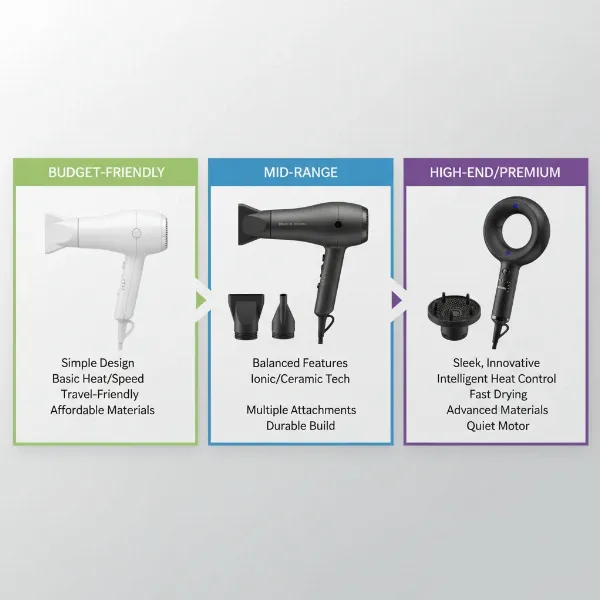 visual comparison of budget, mid-range, premium hair dryers
Conclusion
Navigating the world of hair dryers with arthritis doesn’t have to be a source of discomfort. By prioritizing lightweight designs, ergonomic handles, easy-to-use controls, and efficiency-boosting technologies, you can find a hair dryer that truly caters to your needs. Whether you opt for a budget-friendly compact model or invest in a high-end, technologically advanced dryer, the right choice can significantly improve your daily routine, reduce pain, and restore your confidence in styling your hair. Remember, your comfort is paramount. Which of these features will make the biggest difference in your daily hair care routine?
Frequently Asked Questions
What is the ideal weight for a hair dryer for arthritic hands?
The ideal weight for a hair dryer for individuals with arthritic hands is typically under 400 grams (0.88 pounds), with some of the best options weighing as little as 250-380 grams (0.55-0.84 pounds). This significantly reduces strain and fatigue during use.
Are handle-free hair dryers a good option for severe arthritis?
Yes, handle-free hair dryers, especially when used with height-adjustable stands, are an excellent option for severe arthritis as they eliminate the need for gripping entirely. This allows for complete hands-free operation, significantly reducing joint stress and arm fatigue.
How do ionic hair dryers help people with arthritis?
Ionic hair dryers help by emitting negative ions that break down water molecules on the hair more quickly, leading to faster drying times. This reduces the duration you need to hold the dryer, minimizing strain and discomfort for arthritic hands.
What kind of controls should I look for on a hair dryer for limited dexterity?
For limited dexterity, look for hair dryers with large, easily accessible buttons or rocker switches. Avoid models with small, fiddly controls that require fine motor skills or significant finger pressure, as these can be challenging to operate.
Can a hair dryer’s motor affect comfort for arthritis sufferers?
Yes, a powerful and efficient motor, often found in high-speed dryers with brushless technology, can significantly reduce drying time. Shorter drying times mean less time holding the dryer, which directly translates to reduced joint stress and hand fatigue for arthritis sufferers.
Are there any specific techniques to make blow-drying easier with arthritis?
Yes, techniques like thoroughly towel-drying hair beforehand, sitting and supporting your elbow on a cushion, taking short breaks, and working in small sections can make blow-drying much easier and less painful with arthritis. Using a hair dryer stand can also provide hands-free support.
Is it worth investing in an expensive lightweight hair dryer for arthritis?
Investing in a high-end lightweight Hair Dryer can be worthwhile if it offers superior ergonomics, faster drying, and advanced technology that significantly reduces pain and discomfort. These benefits often justify the cost by improving quality of life and making daily hair care manageable.