There’s little more frustrating than being in the middle of styling your hair, only for your hair dryer to suddenly sputter, overheat, and abruptly shut off. This common issue can disrupt your routine and, more importantly, pose potential safety risks. Understanding why your hair dryer overheats and how to address it is crucial for maintaining both your appliance’s longevity and your peace of mind. As a technician with over a decade of experience, I’ve seen countless cases of overheating hair dryers, and the good news is that many of these problems are simple to diagnose and fix. This guide will walk you through the primary causes of hair dryer overheating and automatic shut-off, provide actionable troubleshooting steps, and offer preventative tips to keep your styling tool running smoothly and safely.
Understanding Why Your Hair Dryer Overheats
At its core, a hair dryer is a simple yet powerful device, featuring a motor-driven fan that blows air over a heated coil or element. This combination generates the hot, fast-moving air essential for drying and styling. However, this process also generates significant heat within the appliance. To prevent damage to the internal components and, more critically, to ensure user safety, modern hair dryers are equipped with built-in safety mechanisms.
These mechanisms often include a thermal cutout, which can be either a resettable thermostat or a single-use thermal fuse. A thermostat is designed to trip and temporarily cut power if the internal temperature exceeds a safe limit, resetting automatically once the dryer cools down. A thermal fuse, on the other hand, is a last line of defense; it “blows” permanently if the thermostat fails or if temperatures reach critical levels, requiring replacement to restore functionality. These safety features are vital, acting as guardians against fire hazards and appliance malfunction, highlighting why an overheating dryer shutting off is often a sign that these protections are working as intended.
Common Reasons Your Hair Dryer Overheats and Shuts Off
When your hair dryer repeatedly overheats and shuts down, it’s typically a clear signal that something is impeding its normal operation. Identifying the root cause is the first step toward a solution. Here are the most common culprits:
Blocked Air Vents or Filters
|
Our Picks for the Best Hair Dryer in 2026
As an Amazon Associate I earn from qualifying purchases.
|
||
| Num | Product | Action |
|---|---|---|
| 1 | Wicked Glinda Hair Dryer with Diffuser from Conair - INFINITIPRO by CONAIR Hair Dryer with Ceramic Technology - Includes Diffuser and Concentrator |

|
| 2 | Infiniti PRO CONAIR Hair Dryer with Diffuser, Professional AC Motor, Tourmaline Ceramic Technology Blow Dryer, Includes Concentrator and Blowout Brush, Amazon Exclusive, Gray |
|
| 3 | Conair Double Ceramic Hair Dryer - Blow Dryer with Ionic Conditioning - Includes Concentrator |
|
| 4 | INFINITI PRO by CONAIR Hair Dryer, 1875W Blow Dryer with Diffuser and Concentrator, Ceramic Technology, 3 Heat & 2 Speed Settings, Cold Shot Button, Black |
|
| 5 | Wavytalk Hair Dryer with Diffuser, Blown Away Ionic Hair Dryer for Curly Hair with Comb, 1875W Fast Drying Blow Dryer with Ceramic Technology, 3 Attachments for All Hair Types, Light and Quiet, Black |
|
| 6 | Conair Double Ceramic Hair Dryer, 1875W Blow Dryer with Diffuser and Concentrator, Ionic Conditioning, 3 Heat & 2 Speed Settings, Amazon Exclusive, White |
|
| 7 | Wavytalk Hair Dryer, Blown Away Ionic Hair Dryer for Curly Hair with Diffuser, 1875W Fast Drying Blow Dryer with Ceramic Technology, 3 Attachments for All Hair Types, Light and Quiet, Rose Gold |
|
| 8 | INFINITI PRO by CONAIR Hair Dryer, 1875W Blow Dryer with Diffuser and Concentrator Attachments, AC Motor with Ceramic Technology, 3 Heat & 2 Speed Settings, Plum |
|
| 9 | Wicked Elphaba Hair Dryer with Diffuser from Conair - INFINITIPRO by CONAIR Hair Dryer with Ceramic Technology - Includes Diffuser and Concentrator |
|
| 10 | Infiniti PRO CONAIR Hair Dryer with Diffuser and Concentrator, 1875W Style & Shine Blow Dryer with Tourmaline and Ionic Conditioning to Fight Frizz, 3 Heat & 2 Speed Settings, Blue |
|
This is by far the most frequent reason for hair dryer overheating. Over time, lint, dust, and stray hairs accumulate in the air intake vent, usually located at the back of the dryer. This blockage restricts airflow, forcing the fan motor to work harder and reducing the amount of cool air reaching the heating element. With insufficient airflow to dissipate the heat, the internal temperature rises rapidly, triggering the thermal cutout and causing the dryer to shut off as a safety measure.
Continuous Use Without Breaks
Hair dryers, especially those used on high heat settings, generate a lot of warmth. Using your dryer for extended periods, particularly for long or thick hair, can push its internal components beyond their designed operating temperature. Without adequate cool-down periods, the heat builds up, eventually activating the thermal protection and shutting down the device.
Aging or Worn-Out Components
Like any electrical appliance, hair dryers have a lifespan. Over years of use, internal components such as the heating element or the fan motor can wear down. An aging heating element might become less efficient, producing more heat than necessary, while a tired fan motor might not be able to move air effectively. These inefficiencies lead to higher internal temperatures and increased instances of overheating.
Electrical or Voltage Issues
Sometimes, the problem isn’t with the dryer itself but with its power source. Using flimsy or damaged extension cords can restrict power flow, causing the dryer to work harder and generate excess heat. Unstable voltage from an outlet or an overloaded electrical circuit (common in bathrooms where multiple high-wattage appliances are used simultaneously) can also put undue strain on your hair dryer, leading to overheating.
Motor Malfunction
The fan motor is crucial for circulating air through the dryer. If the motor is failing, spinning too slowly, or partially blocked internally, it won’t be able to push enough air over the heating element to cool it down. This reduced airflow has the same effect as a clogged vent, causing the heating element to overheat rapidly and the dryer to shut down.
Immediate Steps When Your Hair Dryer Overheats
When your hair dryer suddenly goes silent and feels excessively hot, your immediate reaction can significantly impact safety and the potential for a quick fix. Always prioritize safety first.
First, immediately turn off the hair dryer and unplug it from the wall outlet. Do not attempt to re-engage it while it’s still hot. Continuing to use an overheating appliance can exacerbate the problem, potentially leading to internal damage, electrical shorts, or even a fire.
Next, allow the dryer to cool down completely. This could take anywhere from 10 to 30 minutes, depending on how hot it became. Attempting to troubleshoot or restart the dryer before it’s fully cooled can prevent the thermal protection from resetting, or in the case of a permanent thermal fuse, won’t resolve the issue.
Finally, check for a GFCI (Ground Fault Circuit Interrupter) or ALCI (Appliance Leakage Current Interrupter) reset button on the hair dryer’s plug or the wall outlet. Many modern hair dryers come with these safety features, especially those intended for bathroom use. If the dryer shut off due to an electrical fault or immersion in water, the GFCI/ALCI might have tripped. Pressing the “Reset” button (often red or clearly labeled) on the plug or outlet might restore power once the dryer has cooled. If the plug fails to reset, or if it trips immediately again, this indicates a more serious electrical issue that requires further investigation.
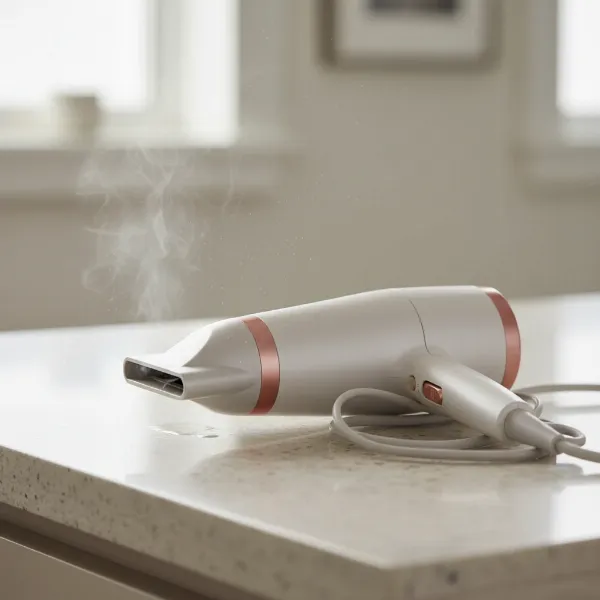 An unplugged hair dryer resting on a counter, safely cooling down after overheating, with a clear focus on the power cord.
Step-by-Step Troubleshooting and Solutions
Once your hair dryer has cooled down and you’ve taken the immediate safety precautions, you can begin a more detailed troubleshooting process. Many common overheating issues can be resolved with simple maintenance.
Clean the Air Intake Vent and Filter
This is the most crucial step and often solves the problem. The air intake vent, usually a mesh or grate at the back of the dryer, is prone to collecting lint, dust, and hair.
- Unplug the dryer completely to avoid any electrical hazards.
- Locate the air intake vent. Some dryers have a removable filter that twists or clicks off, while others have a fixed grate. Refer to your user manual if you’re unsure.
- Use a small brush (an old toothbrush or a stiff makeup brush works well) to gently dislodge any accumulated debris from the vent. For non-removable grates, a clean makeup sponge can effectively wipe out lint and hair with a circular motion.
- For removable filters, you can often rinse them under warm water with a mild soap if they’re particularly greasy or sticky, ensuring they are completely dry before reattaching.
- Use compressed air (available at electronics stores) to blow out any stubborn dust or lint from the internal components accessible through the vent. Hold the dryer firmly and direct short bursts of air away from your face.
After cleaning, reassemble any removable parts securely.
Check for Blockages in the Outlet or Nozzle
While less common, sometimes hair or product buildup can obstruct the airflow coming out of the front nozzle or diffuser attachments. Ensure these are clear of debris. Detach any accessories and clean them if necessary.
Inspect the Power Cord and Plug
Examine the power cord for any visible signs of damage, such as fraying, cuts, or kinks. A damaged cord can lead to poor electrical contact, drawing too much current, and potentially causing both the cord and the dryer to overheat.
- Always plug your hair dryer directly into a wall socket. Avoid using extension cords, especially thin or old ones, as they may not be rated for the high wattage of a hair dryer and can cause voltage drops and overheating.
- If your dryer consistently trips a GFCI outlet, and the outlet itself is not faulty, it might indicate an internal electrical issue within the dryer, which should be addressed by a professional or lead to replacement.
Adjust Usage Habits
Even with a clean dryer, continuous high-heat usage can cause overheating.
- Take short breaks during extended drying sessions to allow the dryer to cool down.
- Utilize lower heat settings whenever possible. Often, a medium heat setting with high airflow is more effective and less damaging to both your hair and the appliance.
- Towel-dry your hair thoroughly before using the dryer. Removing excess moisture reduces the overall drying time, lessening the strain on your appliance.
“Many users underestimate the impact of a clogged filter on their hair dryer’s performance and safety. A simple, routine cleaning can prevent most overheating issues and significantly extend the life of your device.” – Admin, hairdryerbest.com
Preventative Maintenance to Extend Your Hair Dryer’s Life
Proactive care is the best way to prevent your hair dryer from overheating and prolong its operational life. Incorporating a few simple habits into your routine can save you from future frustrations and unexpected replacements.
Regular Filter Cleaning: Make it a habit to clean the air intake filter regularly. Depending on how frequently you use your dryer and the amount of dust and hair in your environment, this could mean once a week, every two weeks, or at least monthly. A quick brush or wipe-down takes mere seconds but makes a significant difference in airflow.
Allow Cool-Down Periods: Avoid running your hair dryer continuously for very long sessions. If you have particularly thick or long hair that requires extended drying, pause for a minute or two between sections to let the internal components cool slightly. This prevents heat buildup and reduces the strain on the thermal protection system.
Proper Storage: When not in use, store your hair dryer in a way that protects its cord and vents. Avoid wrapping the cord tightly around the dryer, which can cause internal wire damage over time. Keep the dryer in a clean, dry place where its vents won’t get accidentally blocked or accumulate excessive dust.
Mindful Heat and Airflow Settings: Understand that higher heat doesn’t always equate to faster or better drying. Experiment with lower heat settings combined with good airflow. This is not only healthier for your hair but also less demanding on your dryer’s heating element and motor, reducing the likelihood of overheating.
Towel Dry Your Hair First: Before reaching for your hair dryer, take a few extra minutes to gently towel dry your hair. Removing excess water reduces the time your dryer needs to operate, thereby minimizing its exposure to high temperatures and prolonged use.
By adopting these preventative measures, you’ll ensure your hair dryer operates efficiently, reduces the risk of overheating incidents, and remains a reliable tool in your daily beauty arsenal for years to come.
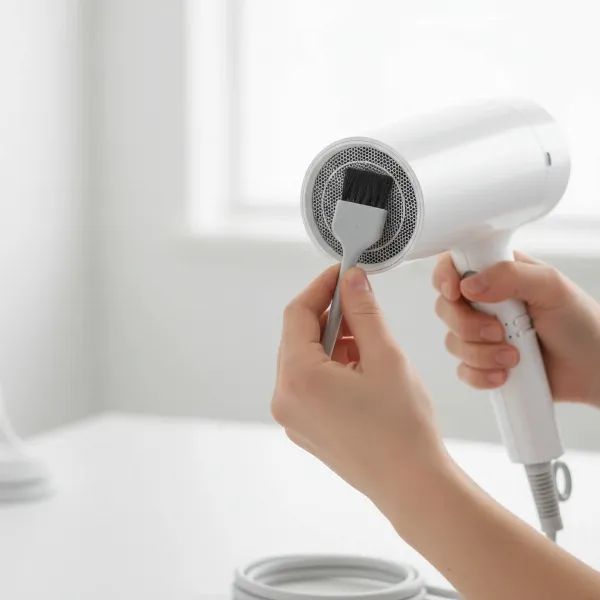 A person using a small brush to clean the air intake filter of a hair dryer, emphasizing preventative maintenance.
When to Consider Repair or Replacement
While many hair dryer overheating issues can be resolved with simple cleaning and adjustments to usage habits, there comes a point when repair or replacement becomes the safer and more practical option. Knowing when to make this decision is crucial for your safety and to avoid throwing good money after bad.
Signs It’s Time for Replacement:
- Persistent Burning Smell: If, even after thorough cleaning, you notice a strong burning plastic or metallic smell during use, it’s a critical warning sign of internal component damage (like a failing motor or heating element) that could escalate into a fire hazard. Stop using it immediately.
- Visible Damage: Any visible damage to the power cord (fraying, exposed wires), the plug, or the dryer’s casing (cracks, melting) warrants immediate replacement. These are direct pathways for electrical shock or fire.
- Repeated Shut-Offs: If your dryer continues to overheat and shut off despite regular cleaning and proper usage, it indicates a deeper internal problem with the thermostat, thermal fuse, or motor that is beyond simple user-level repair.
- Weak Airflow or Inconsistent Heat: A significant drop in airflow, even after cleaning, suggests a failing motor. If the heat is erratic or the dryer only blows cold air, the heating element might be compromised. These issues reduce effectiveness and often precede total failure or overheating.
- Loud Noises or Vibrations: Unusual grinding, rattling, or excessively loud operation from the motor are signs of mechanical failure, which can lead to overheating as the motor struggles.
Safety Risks of Continued Use:
Using a faulty or consistently overheating hair dryer is extremely dangerous. It poses risks of electrical shock, burns, and fire. The thermal cutout mechanisms are safety features, not invitations to keep pushing the appliance. If they are constantly tripping, it means a dangerous condition is present.
Cost-Effectiveness of Repair vs. New Purchase:
For many modern hair dryers, especially mid-range to budget models, the cost of professional repair can often be comparable to, or even exceed, the price of a new unit. Internal repairs involving motor replacement or complex electrical work require specialized tools and expertise. Unless you have a high-end model or sentimental attachment, replacing a persistently problematic hair dryer is usually the more economical and safer choice. It also ensures you benefit from newer safety features and improved efficiency.
Safety First: Essential Precautions
Ensuring safety should always be your top priority when using any electrical appliance, especially a high-heat device like a hair dryer. Adhering to these essential precautions can prevent accidents and ensure a safe styling experience.
Never Use Near Water: This is paramount. Electricity and water are a lethal combination. Always use your hair dryer away from sinks, bathtubs, and showers. Even a slight splash can lead to severe electrical shock or electrocution. If your hair dryer falls into water, DO NOT attempt to retrieve it while it’s still plugged in. Unplug it immediately from the wall outlet (if safe to do so) or switch off the circuit breaker before touching the appliance.
Avoid Covering Vents During Use: Never block the air intake vent (at the back) or the outlet nozzle (at the front) with your hands, a towel, or any other object. Covering the vents severely restricts airflow, causing rapid heat buildup and almost guaranteed overheating. This is a leading cause of thermal cutout activation and can damage the dryer.
Don’t Ignore Burning Smells: A burning odor, especially of plastic or scorched hair, is an immediate red flag. It indicates that internal components are getting too hot or that hair/dust is burning inside. Turn off and unplug the dryer immediately. Do not resume use until the cause has been identified and safely resolved. If the smell persists after cleaning and cooling, cease use and consider replacement.
Use the Correct Voltage: Ensure your hair dryer is compatible with the local voltage supply. Using a dryer designed for a different voltage can lead to overheating and damage. When traveling, always use an appropriate voltage converter if necessary.
Supervise Children: Hair dryers are not toys. Always keep them out of reach of children and never allow children to operate them unsupervised.
By following these fundamental safety guidelines, you can significantly reduce the risks associated with hair dryer use, protecting yourself and your household from potential hazards.
Conclusion
A hair dryer that overheats and shuts off can be a vexing problem, but it’s often a clear signal from your appliance’s built-in safety features designed to protect you. From common culprits like clogged air intake vents and continuous use to more serious issues like faulty electrical components, understanding the “why” is the first step toward a solution. Regular cleaning, mindful usage, and proper storage are simple yet highly effective preventative measures that can significantly extend your hair dryer’s lifespan and ensure consistent performance. While many issues can be resolved with basic troubleshooting, knowing when to opt for professional repair or a new replacement is vital for safety. Always prioritize your well-being, listen to the warning signs your hair dryer gives, and never compromise on electrical safety. What simple maintenance step will you take today to keep your hair dryer operating safely?
Frequently Asked Questions
Why does my hair dryer have a burning smell?
A burning smell typically indicates that dust, lint, or hair has accumulated around the heating element or motor and is being singed. It could also signal internal electrical components overheating or failing. Immediately turn off and unplug the dryer, allow it to cool, and thoroughly clean the air intake filter and vents. If the smell persists after cleaning, stop using the dryer and consider replacing it to avoid fire hazards.
How often should I clean my hair dryer filter?
The frequency depends on usage, but a good rule of thumb is to clean the air intake filter every one to two weeks, or at least monthly, especially if you use hair products that can contribute to buildup. If you notice a decrease in airflow or the dryer feeling hotter than usual, clean it immediately.
Can a hair dryer overheat without being clogged?
Yes, a hair dryer can overheat even if its vents are clean. Other causes include continuous use for extended periods, an aging or faulty heating element, a weak fan motor, or electrical issues like unstable voltage or using an inappropriate extension cord.
What is a thermal fuse in a hair dryer?
A thermal fuse is a safety device designed to permanently cut off power to the hair dryer if its internal temperature exceeds a critical threshold, preventing overheating and potential fires. Unlike a thermostat, which can reset, a thermal fuse “blows” once tripped and requires replacement to restore functionality, often indicating a deeper problem.
Is it normal for a hair dryer to get hot?
Hair Dryers are designed to produce heat, so the air and even parts of the casing will naturally get warm. However, it is not normal for the dryer to become uncomfortably hot to hold, emit burning smells, or shut off automatically during normal use. These are signs of overheating and should be addressed promptly.
