Let’s be real for a moment. The blow dryer is one of the most-used tools in our hair care arsenal. We grab it, blast our hair, and hope for the best. But have you ever stopped to wonder exactly How Far Away To Hold Hair Dryer for optimal results? It feels like a minor detail, but this single factor can be the difference between a glossy, salon-worthy blowout and a frizzy, heat-damaged mess. If you’ve ever battled frizz or felt like your hair just isn’t living up to its potential, you’re in the right place. The secret to unlocking your best hair day might just be a few inches away.
As the lead expert at Hair Dryer Best, I’ve seen firsthand how a simple technique tweak can completely transform hair health. We spend so much time and money on the perfect shampoos, conditioners, and styling products, but we often overlook the most fundamental part of the process: how we actually apply the heat. It’s time to change that.
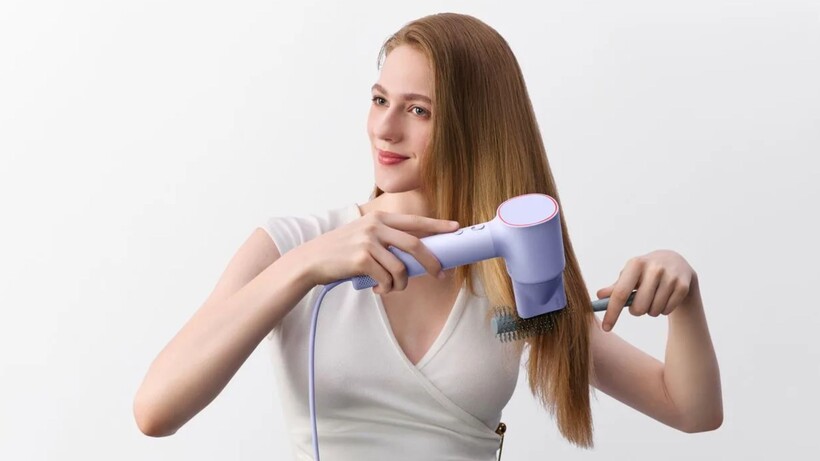
Why The Distance You Hold Your Dryer Matters So Much
Think of your hair dryer like a powerful heat lamp. If you hold it too close to your hair, you’re essentially flash-cooking the strands. This intense, concentrated heat instantly boils the water inside the hair shaft, causing it to expand and crack the outer layer, known as the cuticle. The result? Brittle, weak hair that’s prone to split ends and breakage. You’re not just drying your hair; you’re damaging its very structure.
On the other hand, holding it too far away is inefficient. You’ll be waving it around forever, and the unfocused airflow will just whip your hair around, creating tangles and encouraging frizz as the cuticles are ruffled in every direction. Finding that “sweet spot” is the key to a fast, effective, and—most importantly—healthy blow-dry.
The 6-Inch Rule: Your Golden Standard
So, what is this magic distance? For most situations, the golden rule is to keep your hair dryer about 6 inches (or 15 cm) away from your hair. This distance is the perfect balance, allowing the heat and airflow to be effective enough to dry and style your hair efficiently without scorching your scalp or strands.
How to Eyeball 6 Inches
Don’t worry, you don’t need to carry a ruler into the bathroom. A good way to visualize this is the distance from the tip of your thumb to the tip of your pinky finger when your hand is spread wide. Practice holding the dryer that far from your other hand to get a feel for it.
Expert Tip from Celebrity Stylist, Jonathan Van Meter: “The biggest mistake I see clients make at home is holding the nozzle right up against the brush and hair. This not only fries the hair but also blocks the dryer’s air intake, which can cause the motor to overheat. Constant motion and a safe distance are non-negotiable for hair health.”
Are You Getting Too Close? The Telltale Signs
Your hair and scalp will give you warning signs. Pay attention if you notice:
- Your scalp feels uncomfortably hot.
- The hair section you’re working on feels scorching to the touch.
- You smell a slight burning scent (a major red flag!).
- Your hair feels stiff or “crunchy” after drying.
If you experience any of these, pull the dryer back immediately.
Adjusting Your Technique for Your Hair Type
While 6 inches is a fantastic starting point, the perfect distance can vary slightly depending on your hair’s texture and density. The question of how far away to hold hair dryer isn’t one-size-fits-all.
For Fine or Thin Hair
Fine hair is more susceptible to heat damage because each strand has a smaller diameter. For you, it’s wise to stick to the 6-inch rule diligently, or even increase the distance to 7-8 inches. More importantly, always use a low or medium heat setting. High heat is simply overkill for your delicate strands.
For Thick or Coarse Hair
If you have a thick mane, you might feel tempted to get the dryer closer to speed things up. Resist! While your hair can handle slightly more heat, the 6-inch rule is still your best practice. Instead of getting closer, use a more powerful dryer and a concentrator nozzle to focus the airflow. This will dry your hair faster without needing to increase the heat intensity on your strands.
For Curly or Coiled Hair
Curly girls, your rules are a bit different, especially when using a diffuser. A diffuser’s job is to disperse the airflow to gently dry your curls without disrupting their pattern.
- When using a diffuser, you can bring it much closer to your hair.
- Gently “cup” sections of your curls in the diffuser bowl, bringing it right up to the scalp on a low speed and low-to-medium heat setting.
- Hold it still for 15-30 seconds on each section before moving to the next. The key here is minimal movement to prevent frizz.
Beyond Distance: The Tech That Protects Your Hair
Holding your dryer at the right distance is crucial, but it’s only one piece of the puzzle. The technology inside your dryer plays a massive role in the health and appearance of your hair. If you’re still using a basic, decade-old dryer, you’re missing out on innovations designed to give you a better, safer blowout.
- Ionic Technology: This is a game-changer for fighting frizz. Ionic dryers emit negative ions that break down the positive-charged water molecules on your hair. This not only helps your hair dry faster but also seals the hair cuticle, locking in moisture and leaving your hair looking shinier and smoother.
- Ceramic and Tourmaline: Think of these as heat regulators. Ceramic components ensure the heat is distributed evenly, preventing damaging “hot spots.” Tourmaline is a semi-precious mineral that’s crushed and infused into the dryer’s internal parts. When heated, it produces even more negative ions than standard ionic technology, supercharging the frizz-fighting and shine-boosting effects.
A dryer with these features gives you a much larger margin for error. It works with you to protect your hair, not against you. Check out our guide to the [best ionic hair dryers] to learn more.
Your Step-by-Step Guide to a Flawless, Damage-Free Blowout
Ready to put it all together? Here’s how to achieve that fresh-from-the-salon look while keeping your hair healthy.
- Prep Your Canvas: Never start on sopping wet hair. Gently squeeze out excess water with a towel (microfiber towels are best to reduce friction and frizz). Your hair should be about 60-70% dry before you even plug in the dryer. Always, always apply a heat protectant spray.
- Rough Dry First: Without any nozzle, and using just your fingers, rough-dry your hair until it’s about 80-90% dry. Keep the dryer moving constantly, maintaining that crucial 6-inch distance.
- Section, Section, Section: This is the pro secret to control. Divide your hair into at least four manageable sections (more if your hair is thick). Clip away the sections you aren’t working on.
- Attach the Nozzle: Now, attach your concentrator nozzle. This tool is not optional! It directs the airflow exactly where you want it, giving you a smoother finish and speeding up drying time.
- Style with a Brush: Working one section at a time, take a round brush and place it at the roots. Aim the dryer’s nozzle (still 6 inches away) down the hair shaft, following the brush as you pull it through to the ends. This downward motion helps seal the cuticle flat, which is the key to shine.
- Lock it in with the Cool Shot: Once a section is dry and smooth, hit it with the cool shot button for a few seconds. This blast of cool air sets the style in place and gives an extra boost of shine.
Frequently Asked Questions
What happens if I hold the hair dryer too close?
Holding the dryer too close concentrates intense heat on one spot, which can burn your scalp and hair. It leads to moisture loss, cuticle damage, frizz, brittleness, and an increased risk of split ends. In severe cases, it can cause irreversible damage to the hair follicle.
How do I know which heat and speed setting to use?
For most hair types, a medium heat and medium speed setting is a safe bet for general drying. Use high heat only if you have very thick, coarse hair and are styling with a round brush. Fine, thin, or damaged hair should always stick to low or medium heat. High speed is great for rough drying, while a lower speed gives you more control during precision styling.
Does the concentrator nozzle really make a difference?
Absolutely. The concentrator nozzle is essential for a smooth, polished look. It focuses the stream of air, allowing you to direct heat precisely down the hair shaft to seal the cuticle. Without it, the air blows around chaotically, which is a primary cause of frizz.
Is it better to let my hair air-dry or blow-dry it?
It’s a balance. While air-drying avoids heat damage, studies have shown that leaving hair wet for extended periods can cause the inner cortex to swell, putting pressure on the cuticle and potentially causing damage from within. The healthiest approach is to let your hair air-dry about 70-80% of the way, then use a blow dryer on a low-to-medium heat setting to finish the job quickly.
How often can I safely blow dry my hair?
If you use the proper technique—applying a heat protectant, maintaining the correct distance of how far away to hold hair dryer, and using the right heat settings—you can safely blow dry your hair every time you wash it. The key is minimizing damage with each use.
The Takeaway
The question of how far away to hold hair dryer is more than just a minor detail; it’s a cornerstone of healthy hair care. The 6-inch rule, combined with constant motion and the right technology, empowers you to take control of your hair’s health. By investing in a quality tool and mastering these simple techniques, you’re not just drying your hair—you’re styling it, protecting it, and setting yourself up for a great hair day, every day. Now go forth and create that perfect, healthy blowout you deserve.