Ever spent precious time crafting the perfect blowout, only to look in the mirror and see a halo of static and flyaways? It’s a frustrating moment we’ve all had. You’re left wondering, Why Is My Hair Staticy After Blow Drying when I did everything right? Trust me, you’re not alone in this battle. As the lead tech expert here at Hair Dryer Best, I’ve seen this issue trip up countless people. The good news is that the solution is often simpler than you think, and it lies in understanding the science of your hair and the technology in your hands.
The culprit is a simple imbalance of positive and negative ions. When you blast your hair with hot air from a subpar dryer, you’re often stripping it of its natural negative ions. This leaves your hair strands with a positive charge. And what do two positively charged things do? They repel each other—voilà, static! It’s not just about getting your hair dry; it’s about doing it in a way that leaves your hair’s natural balance intact. Let’s dive deep into how to banish static for good and achieve that silky, salon-smooth finish every single time.
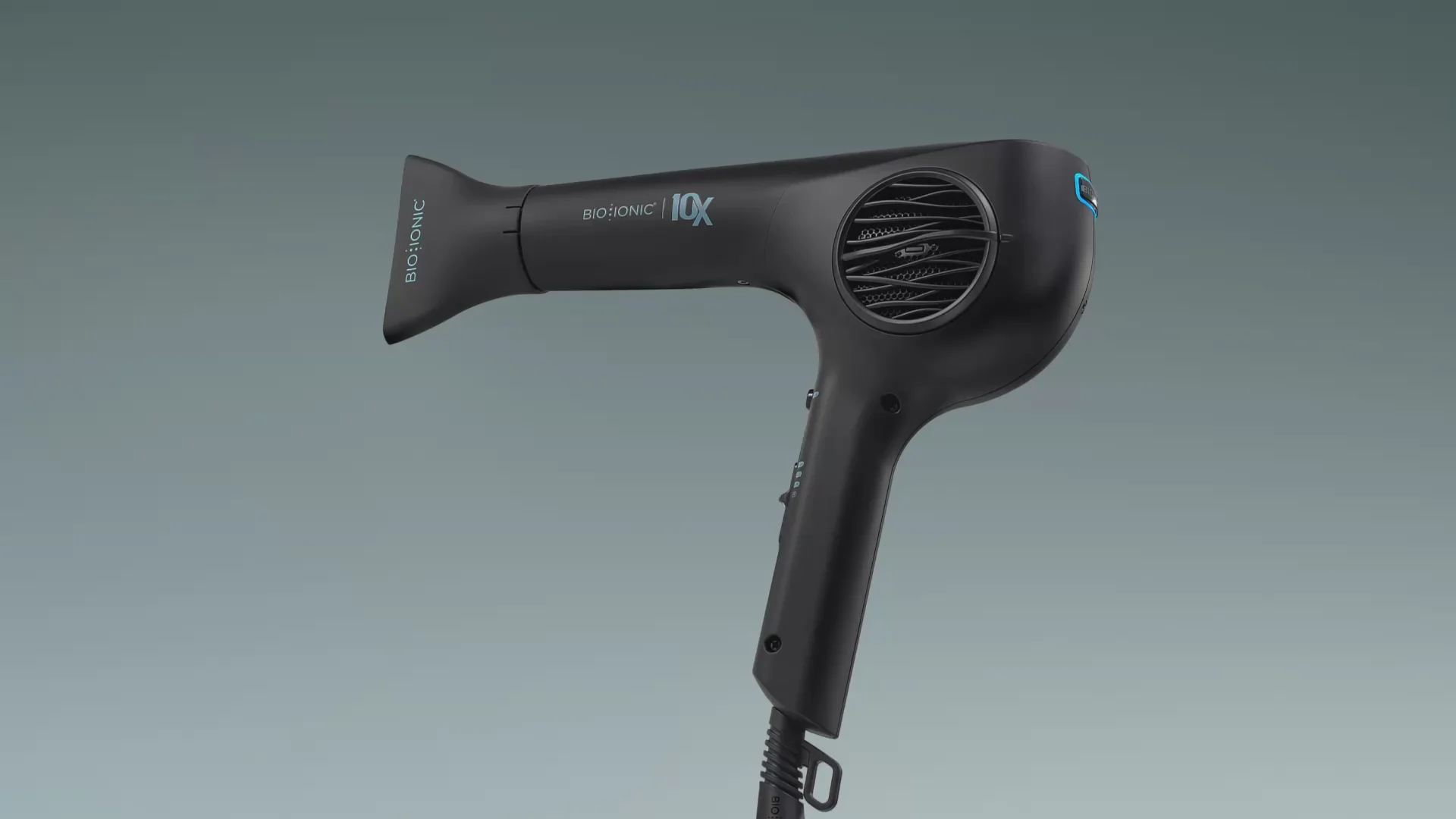
The Real Culprit: Understanding Static and Your Hair
Before we talk about tools, let’s get a handle on the “why.” Your hair, in its natural, healthy state, carries a negative electrical charge. The problem starts with friction—think of roughly towel-drying your hair or using a plastic brush. This friction, combined with the hot, chaotic air from a basic hair dryer, strips away those negative ions.
What you’re left with are positively charged hair strands. Think back to science class: like charges repel. Each individual strand of hair starts pushing away from its neighbor, creating that floating, uncontrollable effect we call static. Dry air, especially in the winter, makes this even worse because there’s less moisture in the atmosphere to help neutralize the charge. So, when you’re asking why is my hair staticy after blow drying, the short answer is an electrical imbalance, often made worse by your drying routine.
Your Secret Weapon: How the Right Hair Dryer Fights Static
This is where technology becomes your best friend. A modern, well-engineered hair dryer isn’t just a hot-air-blasting machine; it’s a sophisticated tool designed to dry your hair quickly while actively improving its condition. The magic lies in a few key technologies that directly combat the causes of static.
Ionic Technology: The Static Slayer
If there’s one feature you need to look for to combat static, this is it. Ionic hair dryers are engineered with a special generator that emits a stream of negative ions. These negative ions are the heroes of our story. They interact with the positively charged water molecules on your hair, breaking them down into smaller particles that evaporate faster.
But more importantly, they neutralize the positive charge on your hair strands that causes static in the first place.
“I always tell my clients that an ionic dryer is non-negotiable for smooth hair,” says renowned celebrity hairstylist Dr. Evelyn Reed. “It’s like a peacemaker that calms down every single strand, forcing them to lie flat and smooth. The difference is immediately visible.”
The result? The hair cuticle is sealed, moisture is locked in, and static is eliminated. Your hair is left smoother, shinier, and healthier-looking.
Ceramic and Tourmaline: The Gentle Giants
While ionic technology is the star, ceramic and tourmaline are the crucial supporting cast.
- Ceramic: This material is a game-changer for heat distribution. Basic dryers often have “hot spots” that scorch some sections of your hair while leaving others damp. Ceramic components, whether it’s the internal coil or the grille, ensure the heat is gentle, even, and consistent. This prevents you from over-drying and damaging your hair, which is a major contributor to frizz and static.
- Tourmaline: Think of tourmaline as a supercharger for ionic technology. This semi-precious gemstone, when heated, naturally produces an even greater amount of negative ions. Many high-end dryers have components coated in crushed tourmaline to maximize the static-fighting and shine-boosting effects.
When you see a dryer that boasts all three—Ionic, Ceramic, and Tourmaline—you’ve found a powerful tool designed specifically to give you a flawless, static-free blowout.
Bảng trống.Which Hair Dryer is Best for Your Hair Type?
A common question we get is whether one type of dryer works for everyone. The simple answer is no. To get the best results and protect your hair health, you should choose a dryer with features suited to your specific hair type.
Your ideal hair dryer will have the technology to fight static while providing the right level of power and heat for your hair’s density and texture, preventing unnecessary heat damage.
For Fine or Thin Hair
If you have fine hair, your main goals are to add volume without causing damage or weighing it down.
- Look for: A dryer with multiple, lower heat settings and a lower wattage (around 1800W is great). Ceramic technology is essential here to provide gentle, even heat. An ionic feature can be used sparingly or on a low setting to tame flyaways without flattening your hair.
- Key Feature: A concentrator nozzle is your best friend. It allows you to direct airflow right at the roots while using a round brush to lift and create volume.
For Thick or Coarse Hair
Thick hair can hold a lot of water, meaning drying time can be a real chore. You need power, but controlled power.
- Look for: A dryer with a powerful motor (1875W to 2200W) to speed up drying time. Ionic and Tourmaline technologies are must-haves to smooth the cuticle of your coarser strands and eliminate frizz.
- Key Feature: Make sure it has multiple heat and speed settings. You’ll want high speed and heat to remove the bulk of the moisture, then a lower setting to style.
For Curly Hair
The number one rule for curly hair is to avoid disrupting the natural curl pattern. Blasting it with high heat is a recipe for a frizzy, undefined mess.
- Look for: A dryer with ionic technology to fight frizz and multiple low-speed and low-heat settings.
- Key Feature: A diffuser attachment is non-negotiable. This attachment disperses the airflow over a wider area, allowing you to gently dry your curls, enhance their natural shape, and add volume without creating frizz.
Your At-Home Blowout: A Step-by-Step Guide to a Static-Free Finish
Having the right tool is half the battle. The other half is technique. Follow these steps to get a sleek, professional finish every time.
- Start with the Right Foundation: After washing, gently squeeze excess water from your hair with a microfiber towel or an old t-shirt. Avoid rubbing vigorously with a regular cotton towel—this roughs up the hair cuticle and is a major cause of frizz and static before you even begin.
- Apply a Heat Protectant: Never skip this step. A good heat protectant creates a barrier between your hair and the heat, preventing damage and often contains ingredients that help smooth the hair cuticle.
- Rough-Dry Your Hair: Without any nozzle attached, use your fingers to rough-dry your hair on a medium heat setting until it’s about 80% dry. Flip your head upside down to create root lift and volume.
- Section Your Hair: This is the secret to a professional blowout. Divide your hair into manageable sections (4-6 is usually good) and clip them up. Working one small section at a time gives you control and ensures every strand is dried smoothly.
- Use the Concentrator Nozzle: Attach your concentrator nozzle. This is crucial for directing airflow precisely where you want it. Always point the nozzle down the hair shaft, from root to tip. This helps the cuticle lie flat, which is the key to shine and smoothness.
- The Cool Shot Button is Your Friend: Once a section is dry, press the cool shot button for a few seconds. This blast of cool air sets the style and seals the hair cuticle, locking in shine and preventing static from forming later.
- Finish with a Light Serum: Once all sections are dry, you can apply a tiny drop of anti-frizz serum or hair oil to your palms, rub them together, and lightly smooth over the surface of your hair for extra shine and protection.
Common Mistakes That Cause Static (And How to Avoid Them)
Still struggling? You might be making one of these common mistakes.
- Using Plastic Brushes or Combs: Plastic is a poor conductor of electricity and can actually increase static. Opt for a brush with natural bristles (like boar bristle) or a comb made of wood or carbon.
- Over-Drying Your Hair: Drying your hair until it’s bone-dry strips it of all moisture, leading to damage and static. Stop when your hair feels dry to the touch but still has a hint of coolness.
- Starting with Soaking Wet Hair: Applying high heat to sopping wet hair boils the water within the strand, causing major damage. Always let your hair air-dry or towel-dry to at least 60-70% dryness first.
- Holding the Dryer Too Close: Keep the dryer at least 6 inches away from your hair to prevent scorching and heat damage.
Frequently Asked Questions
Can the products I use cause static after blow drying?
Absolutely. Shampoos and conditioners with harsh sulfates can strip your hair of its natural oils, making it drier and more prone to static. Look for hydrating, sulfate-free formulas. Also, avoid heavy use of alcohol-based styling products, which can be very drying.
Does a diffuser help reduce static?
Yes, especially for curly hair. A diffuser slows down and disperses the airflow, which is much gentler on the hair cuticle. This gentle drying process helps prevent the friction and cuticle disruption that leads to frizz and static.
How often should I clean my hair dryer?
You should clean the rear filter of your hair dryer at least once a month, or more if you use it daily. A clogged filter restricts airflow, causing the motor to work harder and the heating element to get hotter. This can lead to heat damage and less efficient drying, contributing to your static problems.
Is air-drying better than blow-drying to prevent static?
While air-drying avoids heat damage, it doesn’t necessarily prevent static. As your hair dries, friction from your clothes or movement can still create static, especially in a dry environment. A proper blow-drying technique with an ionic dryer is often more effective at creating a smooth, static-free finish.
Why does my hair get more static in the winter?
The air in winter is much less humid than in the summer. This lack of moisture in the atmosphere means there’s nothing to help dissipate the electrical charge that builds up on your hair, leading to significantly more static. Using a leave-in conditioner and an ionic dryer is extra important during these months.
Your Path to a Perfect, Static-Free Blowout
So, the next time you find yourself asking why is my hair staticy after blow drying, you’ll have the answer. It’s not a mystery, but a matter of science. The friction and positive ions from an outdated dryer and improper technique are working against you. By investing in a quality hair dryer with ionic, ceramic, and tourmaline technology, and by mastering a few simple techniques, you can transform your hair routine. You’ll not only banish static for good but also unlock healthier, shinier, and more manageable hair. It’s time to take control and make every day a great hair day.