For years, the advice has been clear: air drying your hair is the healthier choice, while blow drying risks damage from harsh heat. But what if this conventional wisdom isn’t the whole truth? Emerging scientific insights suggest that the debate isn’t as simple as heat versus no heat; rather, it’s about understanding the unique impact each drying method has on your hair’s structure and health, and crucially, how you execute it. It’s time to move beyond assumptions and discover the best way to care for your locks, whether you embrace the natural breeze or harness the power of a modern Hair Dryer.
The Air Drying Advantage: Gentle or Damaging?
Air drying often seems like the most natural and gentle approach, allowing your hair to dry without direct thermal intervention. This method is praised for reducing immediate heat exposure, which is a common culprit for hair damage.
Benefits of Air Drying
Opting to air dry your hair means you sidestep the direct impact of high temperatures, which can strip hair of its natural moisture and lead to dryness and brittleness. By letting your hair dry naturally, you preserve its inherent hydration, often resulting in softer strands. This method also allows your natural waves and curls to form without manipulation, enhancing their inherent texture. For those with delicate or chemically treated hair, avoiding heat can be a welcome relief, minimizing potential stress and preserving color and integrity.
The Hidden Risks of Air Drying
Despite its perceived gentleness, air drying isn’t without its drawbacks, particularly when hair remains wet for extended periods. Research indicates that while blow drying can cause surface damage to the hair cuticle, prolonged air drying can actually harm the inner cell membrane complex (CMC) of the hair. This deeper structural damage occurs because wet hair swells, making it more vulnerable and susceptible to weakening over time. Moreover, extended dampness can lead to increased frizz and tangles, as the hair cuticle remains open longer, allowing more moisture absorption from the environment. For scalp health, leaving your scalp damp for too long creates a warm, humid environment that can encourage fungal growth and exacerbate issues like dandruff and itchiness, especially for individuals with naturally oily or sensitive scalps.
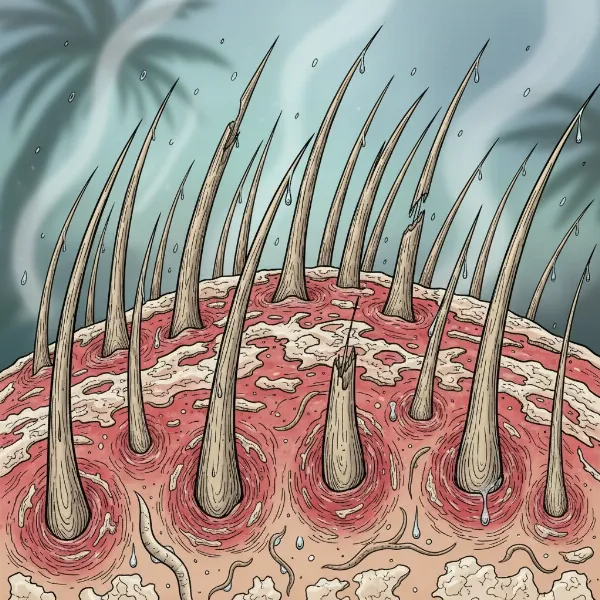 Illustration of scalp irritation and hair damage from prolonged wetness and fungal growth.
The Blow Drying Dilemma: Harmful Heat or Healthy Styling?
Blow drying has long been seen as the villain in hair care, primarily due to the fear of heat damage. However, advancements in technology and a better understanding of proper techniques have redefined its role, making it a viable—and sometimes preferable—option for hair health and styling.
Advantages of Controlled Blow Drying
When performed correctly, blow drying offers significant advantages, starting with speed and convenience, which is invaluable for those with busy lifestyles or thick hair. Beyond mere drying, it provides exceptional styling control, allowing you to achieve volume, bounce, and a polished finish that air drying often cannot. From a health perspective, rapidly drying your scalp can prevent the prolonged dampness that contributes to fungal growth and dandruff, promoting a healthier scalp environment. For individuals with oily hair, blow drying can help distribute natural sebum more evenly, reducing oiliness at the roots. Modern, high-quality blow dryers often incorporate advanced technologies, such as ionizing features that help break down water molecules faster, reducing drying time and smoothing the hair cuticle, or intelligent heat control systems that prevent overheating and minimize damage.
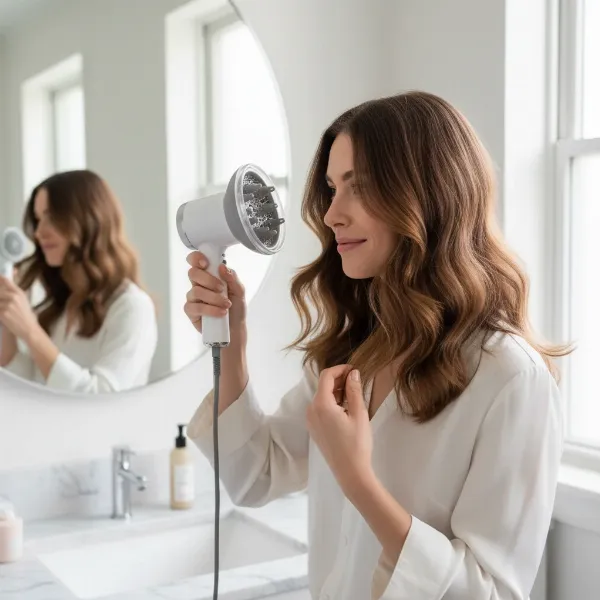 Woman using a modern blow dryer with a diffuser, achieving volume and smooth, healthy hair.
The Perils of Improper Blow Drying
While modern blow dryers and techniques have improved, the risks associated with improper blow drying remain significant. Excessive heat, applied too close or for too long, can cause considerable damage to the hair’s outer cuticle, leading to a rough texture, increased porosity, and a dull appearance. This weakening can make hair more prone to breakage and, over time, contribute to hair loss. Over-drying, especially at the roots, can strip the scalp of its natural oils, leading to dryness and irritation. Additionally, investing in a high-quality blow dryer with advanced features can be a significant upfront cost, which might not be feasible for everyone.
Mastering Your Drying Method: Best Practices for Both
Regardless of whether you choose to air dry or blow dry, the key to healthier hair lies in adopting mindful practices that minimize potential damage.
How to Air Dry Your Hair Healthily
To make air drying a truly beneficial experience, start by gently squeezing excess water from your hair with a microfiber towel instead of vigorously rubbing, which can cause frizz and breakage. After towel-drying, apply a leave-in conditioner or a curl cream to help define your natural texture and lock in moisture. When detangling, always use a wide-tooth comb on damp hair, working from the ends upwards to prevent snapping. Crucially, avoid going to bed with wet hair, as the friction against pillows can cause tangles and damage, and the prolonged dampness can foster scalp issues. Ensure your scalp dries thoroughly to prevent fungal growth, especially if you have a sensitive or oily scalp.
How to Blow Dry Your Hair Safely
When blow drying, preparation is paramount. Always apply a high-quality heat protectant spray evenly through your damp hair; this creates a barrier against thermal damage. Opt for a moderate heat setting and maintain a distance of approximately 15 cm (about 6 inches) between the dryer nozzle and your hair to prevent concentrated heat exposure. Keep the dryer in continuous motion, never focusing on one section for too long, to ensure even drying and prevent scorching. Sectioning your hair before you begin can help you dry each part efficiently and thoroughly without over-exposing other areas. Investing in a blow dryer with precise heat control and strong airflow can make a significant difference in minimizing damage.
Which Method is Healthier for Your Hair Type?
The “healthier” drying method isn’t one-size-fits-all; it largely depends on your individual hair and scalp characteristics.
For those with an oily scalp or prone to dandruff, quick drying, ideally with a low-temperature blow dryer, can be more beneficial. This prevents the prolonged dampness that encourages bacterial and fungal growth, common culprits for scalp issues. If you have fine hair, air drying or using a blow dryer on a cool or low-heat setting is advisable to avoid weighing it down or causing excessive dryness. Thick hair often takes a long time to air dry, which can lead to the inner structural damage mentioned earlier; therefore, a careful, low-to-moderate heat blow dry might be more practical and healthier in the long run. For curly or wavy hair, air drying can enhance natural curl patterns but might also lead to frizz. In this case, a controlled blow dry with a diffuser on a low setting can help define curls while minimizing frizz and drying time.
Conclusion
The debate between blow drying and air drying reveals that neither method is inherently superior; rather, the “healthier” choice hinges on informed practices and understanding your hair’s unique needs. While air drying avoids direct heat, prolonged wetness can surprisingly damage hair’s inner structure and compromise scalp health. Conversely, controlled blow drying with proper technique and quality tools can be efficient and even protective, especially for certain hair and scalp types. The ultimate goal is to minimize stress on your strands, whether that means embracing careful air drying or mastering the art of the low-heat blow dry. By being mindful of your methods, you empower your hair to look its best, naturally vibrant and strong. What’s your go-to method, and what steps do you take to keep your hair healthy?
Frequently Asked Questions
Is it bad to sleep with wet hair?
Sleeping with wet hair is generally not recommended. Your hair is most fragile when wet, making it more prone to breakage and tangles from friction against your pillow. Additionally, the prolonged dampness can create a breeding ground for bacteria and fungi on your scalp, potentially leading to irritation or infections.
Can air drying cause fungal infections on the scalp?
Yes, air drying, especially when hair takes a long time to dry, can contribute to fungal growth on the scalp. The warm, moist environment created by damp hair is ideal for fungi, which can lead to conditions like dandruff or other scalp irritations. Ensuring your scalp is thoroughly dry is crucial for scalp health.
What is the ideal temperature for blow drying?
The ideal temperature for blow drying is a moderate to low heat setting. High heat can strip hair of its natural moisture and cause significant damage to the cuticle. Using a cooler setting or alternating between warm and cool air, along with a heat protectant, helps to minimize thermal stress and preserve hair health.
Do heat protectants really work?
Absolutely, heat protectants play a vital role in minimizing damage from heat styling. They create a protective barrier on the hair shaft, distribute heat more evenly, and often contain ingredients that can help to moisturize and condition the hair, reducing the impact of high temperatures.
How far should I hold the blow dryer from my hair?
You should ideally hold the blow dryer at a distance of about 15 cm (approximately 6 inches) from your hair. This distance helps to diffuse the heat, preventing concentrated exposure that can scorch or over-dry specific sections of your hair, thus reducing the risk of heat damage.
