Achieving a salon-perfect blow dry at home is a skill many aspire to, but often, unseen mistakes can lead to frustrating hair damage, particularly split ends. These tiny fractures at the end of your hair strands can make your locks look dull, frizzy, and unhealthy. Understanding the common pitfalls of blow drying and adopting proper techniques is crucial to preserving your hair’s integrity, ensuring it remains smooth, shiny, and free from damage. Let’s delve into the world of blow drying to identify these common errors and equip you with the knowledge to maintain gorgeous, healthy hair.
Understanding Split Ends: What They Are and Why They Form
Split ends, scientifically known as trichoptilosis, occur when the hair’s protective outer layer, the cuticle, becomes damaged and peels back, exposing the inner cortex. This exposure causes the hair shaft to fray and split, typically at the ends, but it can occur higher up the strand as well.
The Anatomy of a Healthy Hair Strand
|
Our Picks for the Best Hair Dryer in 2026
As an Amazon Associate I earn from qualifying purchases.
|
||
| Num | Product | Action |
|---|---|---|
| 1 | Wicked Elphaba Hair Dryer with Diffuser from Conair - INFINITIPRO by CONAIR Hair Dryer with Ceramic Technology - Includes Diffuser and Concentrator |

|
| 2 | Wavytalk Hair Dryer with Diffuser, Blown Away Ionic Hair Dryer for Curly Hair with Comb, 1875W Fast Drying Blow Dryer with Ceramic Technology, 3 Attachments for All Hair Types, Light and Quiet, Black |
|
| 3 | INFINITI PRO by CONAIR Hair Dryer, 1875W Blow Dryer with Diffuser and Concentrator, Ceramic Technology, 3 Heat & 2 Speed Settings, Cold Shot Button, Black |
|
| 4 | Infiniti PRO CONAIR Hair Dryer with Diffuser and Concentrator, 1875W Style & Shine Blow Dryer with Tourmaline and Ionic Conditioning to Fight Frizz, 3 Heat & 2 Speed Settings, Blue |
|
| 5 | INFINITI PRO by CONAIR Hair Dryer, 1875W Blow Dryer with Diffuser and Concentrator Attachments, AC Motor with Ceramic Technology, 3 Heat & 2 Speed Settings, Plum |
|
| 6 | Wavytalk Hair Dryer, Blown Away Ionic Hair Dryer for Curly Hair with Diffuser, 1875W Fast Drying Blow Dryer with Ceramic Technology, 3 Attachments for All Hair Types, Light and Quiet, Rose Gold |
|
| 7 | Infiniti PRO CONAIR Hair Dryer with Diffuser, Professional AC Motor, Tourmaline Ceramic Technology Blow Dryer, Includes Concentrator and Blowout Brush, Amazon Exclusive, Gray |
|
| 8 | Conair Double Ceramic Hair Dryer - Blow Dryer with Ionic Conditioning - Includes Concentrator |
|
| 9 | Wicked Glinda Hair Dryer with Diffuser from Conair - INFINITIPRO by CONAIR Hair Dryer with Ceramic Technology - Includes Diffuser and Concentrator |
|
| 10 | Conair Double Ceramic Hair Dryer, 1875W Blow Dryer with Diffuser and Concentrator, Ionic Conditioning, 3 Heat & 2 Speed Settings, Amazon Exclusive, White |
|
A healthy hair strand is a marvel of natural engineering, composed of three main layers: the medulla (innermost core, not always present), the cortex (the middle layer providing strength and color), and the cuticle (the outermost layer, resembling overlapping scales or shingles that protect the inner layers). When these cuticles lie flat, your hair appears smooth, shiny, and strong.
How Heat and Friction Contribute to Split Ends
Excessive heat and mechanical friction are primary culprits in cuticle damage. During blow drying, high temperatures can rapidly evaporate the hair’s natural moisture, leading to brittleness. This heat can also break down keratin proteins, which are essential for hair strength and elasticity. Combined with rough handling or improper brushing, the hair shaft becomes vulnerable, and the cuticle scales lift and eventually split. Temperatures above 150°C (302°F) are particularly damaging, severely impacting the hair’s cortex and accelerating split end formation.
Top Blow Drying Mistakes That Cause Split Ends and Damage
Even with the best intentions, many individuals unknowingly engage in blow drying habits that compromise hair health. Recognizing these common errors is the first step toward achieving a truly damage-free style.
Using Excessive Heat and Wrong Temperature Settings
One of the most damaging blow drying mistakes is cranking up the heat to the highest setting, believing it will speed up the drying process. However, excessive heat strips your hair of its natural moisture, making it brittle, dry, and prone to breakage and split ends. Fine or color-treated hair is especially vulnerable and requires a gentler approach. Start with a low to medium heat setting and adjust based on your hair type, always aiming for the minimum heat necessary to achieve your desired style.
Skipping Heat Protectant: A Non-Negotiable Step
Many overlook the crucial step of applying a heat protectant. This product acts as a barrier between your hair and the blow dryer’s heat, shielding strands from thermal damage. It helps lock in moisture, smooth the cuticle, and significantly reduces the risk of split ends and breakage. Think of it as sunscreen for your hair—essential protection before exposure.
Starting with Soaking Wet Hair
Attempting to blow dry hair straight out of the shower when it’s dripping wet is a common error. Hair is most fragile when wet, and prolonged exposure to high heat in this state can cause steam damage, leading to significant breakage. Instead, gently towel-dry your hair to remove excess water until it’s damp, not soaking, before introducing heat. Aim for about 50-80% air-drying or gentle towel-drying first.
Holding the Hair Dryer Too Close or Stationary
Holding your blow dryer too close to your hair or focusing the heat on one spot for too long can severely overheat and damage the hair shaft and even burn your scalp. This concentrated heat directly on delicate areas leads to dryness, brittleness, and inevitably, split ends. Always maintain a distance of at least 6-8 inches (15-20 cm) between the dryer nozzle and your hair, and keep the dryer constantly moving to ensure even heat distribution.
Neglecting the Concentrator Nozzle
The concentrator nozzle that comes with your hair dryer is not merely an accessory; it’s a vital tool for precise styling and damage prevention. Removing it causes chaotic airflow, leading to frizz, uneven drying, and increased heat exposure across wider, more vulnerable areas. Using the nozzle helps direct the airflow exactly where you need it, smoothing the hair cuticle and making your blow dry more efficient and less damaging. Ensure you direct the airflow down the hair shaft, from roots to ends.
Over-Drying Your Hair
While you want your hair to be dry, over-drying can be just as detrimental as using too much heat. Drying your hair until it’s completely parched strips it of its remaining moisture, leaving it dull, brittle, and prone to frizz and split ends. Pay close attention to your hair’s texture and appearance; stop blow drying once your hair feels dry to the touch, and then use a cool shot to seal the cuticle.
Rough Handling and Incorrect Brushing Techniques
Aggressively brushing or combing wet hair can cause significant mechanical damage, especially when hair is most vulnerable. Y anking a comb through knots can lead to breakage and worsen existing split ends. When detangling, always start from the ends of your hair and gently work your way up to the roots using a wide-tooth comb or a wet brush.
Not Sectioning Your Hair Properly
Attempting to blow dry your entire head of hair at once is inefficient and ineffective. Large sections mean some areas will be over-dried while others remain damp, leading to uneven results and increased heat exposure for certain strands. Dividing your hair into manageable sections with clips allows for more thorough and even drying, reducing the time heat is applied to any single area and giving you better control over your style.
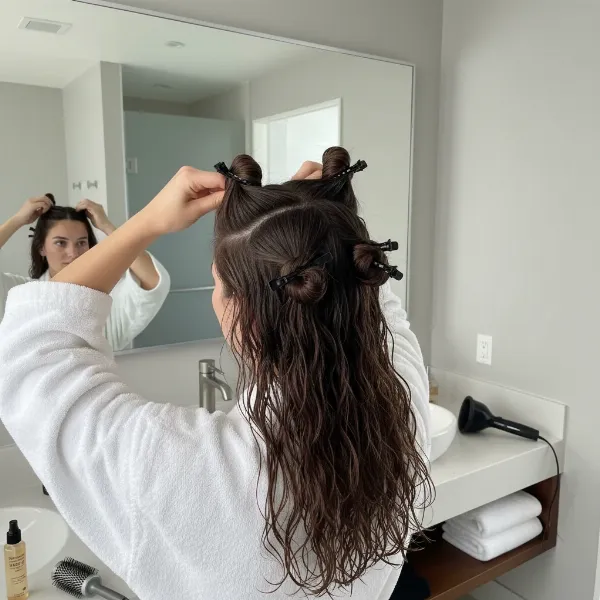 A person sectioning their hair with clips before blow drying to prevent damage and split ends
Using an Outdated or Inadequate Hair Dryer
Not all hair dryers are created equal. An old or low-quality dryer might have uneven heat distribution, inconsistent airflow, or lack essential features like adjustable heat and speed settings or a cool shot button. Investing in a good quality hair dryer with ionic or ceramic technology can make a significant difference. These technologies help distribute heat more evenly, reduce frizz, and dry hair faster with less damage.
The Art of Damage-Free Blow Drying: Techniques for Healthy Hair
Transform your blow-drying routine into a hair-health ritual by mastering these effective techniques designed to minimize damage and promote beautiful, split-end-free hair.
Pre-Drying Essentials: Towel Drying and Product Application
Before reaching for your blow dryer, gently squeeze excess water from your hair using a microfiber towel or a soft cotton t-shirt. Avoid vigorously rubbing your hair, which can roughen the cuticles and cause frizz. Once damp, generously apply a high-quality heat protectant spray or cream evenly from roots to ends. For added nourishment, consider a leave-in conditioner, especially if your hair is prone to dryness.
Choosing the Right Heat and Speed for Your Hair Type
The optimal heat and speed settings are tailored to your hair type:
- Fine or Damaged Hair: Use the lowest heat and low speed setting. This gentle approach prevents over-drying and excessive stress on fragile strands.
- Medium or Normal Hair: A medium heat and medium speed setting is often ideal, providing efficient drying without unnecessary damage.
- Thick or Coarse Hair: You can generally use a medium to high heat and high speed setting for faster drying, but always prioritize what feels comfortable and non-damaging to your hair.
- Ionic and Ceramic Technology: Modern dryers with ionic technology help break down water molecules faster, reducing drying time and frizz. Ceramic technology provides even heat distribution, minimizing hot spots.
Mastering the Movement: Distance and Direction
Always keep the blow dryer moving and maintain a distance of at least 6-8 inches (15-20 cm) from your hair. This prevents heat concentration in one area, which can lead to burning and damage. Crucially, direct the airflow down the hair shaft, from roots to ends. This technique smooths the hair cuticle, seals in shine, and drastically reduces frizz and the likelihood of split ends. Blowing air upwards or against the cuticle will only rough it up.
The Importance of a Cool Shot
After your hair is mostly dry, switch to the cool shot setting. This blast of cold air helps to seal the hair cuticle, locking in your style and adding shine. It’s a critical finishing step that reinforces the hair’s protective layer and contributes to overall hair health, making your blow dry last longer and look smoother.
Essential Tools and Products for Preventing Split Ends
Beyond technique, the right arsenal of tools and products can significantly enhance your blow drying experience and safeguard your hair from future damage.
High-Quality Hair Dryers: Ionic and Ceramic Technologies
Invest in a Hair Dryer that offers multiple heat and speed settings, along with a cool shot button. Ionic dryers emit negatively charged ions that break down water molecules quickly, leading to faster drying times and reduced frizz. Ceramic or tourmaline components ensure even heat distribution, protecting hair from hot spots and minimizing damage. These features are key for a healthier blow dry.
Gentle Brushes and Combs
The type of brush you use can impact hair health. Avoid metal brushes, which can heat up and scorch your hair. Instead, opt for brushes with natural boar bristles or gentle nylon bristles that glide through hair without snagging. A wide-tooth comb is indispensable for detangling wet hair, working gently from the ends upwards to prevent breakage.
Effective Heat Protectants and Leave-in Conditioners
A good heat protectant is paramount. Look for sprays or creams that offer thermal protection up to high temperatures and contain moisturizing ingredients. Leave-in conditioners are also excellent for providing an extra layer of moisture and protection, especially for dry or treated hair, helping to keep strands supple and resilient against heat.
“Many believe that faster drying requires hotter settings, but smarter drying means less damage. The key is combining the right heat protectant with precise technique and never over-drying.” – Dr. Elena Petrova, Hair Care Scientist
Beyond Blow Drying: Holistic Care for Strong, Split-End Free Hair
While proper blow drying techniques are vital, preventing split ends is also part of a broader, holistic hair care routine.
The Power of Regular Hair Trims
The most effective way to eliminate existing split ends is a regular trim. Hair stylists generally recommend getting your hair trimmed every 6-8 weeks to snip off damaged ends before they can travel further up the hair shaft. This practice keeps your hair looking fresh, healthy, and encourages overall growth.
Nourishing Hair Masks and Treatments
Incorporate deep conditioning treatments or hair masks into your weekly routine. These treatments provide intensive moisture and repair, strengthening the hair shaft and making it more resilient to external stressors, including heat styling. Look for ingredients like keratin, argan oil, and shea butter.
Gentle Detangling Practices
Always detangle your hair gently. When wet, use a wide-tooth comb and work from the ends, gradually moving up towards the roots. For dry hair, use a soft-bristled brush. Avoid aggressive brushing or yanking, which can cause mechanical damage and exacerbate split ends.
Conclusion
Blow drying is an indispensable part of many hair care routines, offering speed and style. However, neglecting proper techniques can inadvertently lead to heat damage and frustrating split ends. By understanding and avoiding common mistakes—such as using excessive heat, skipping heat protectant, drying soaking wet hair, or improper handling—you can significantly improve your hair’s health. Embracing a routine that includes mindful product application, appropriate tool usage, and gentle techniques, alongside holistic hair care practices like regular trims and deep conditioning, empowers you to achieve beautiful, healthy hair that shines from root to tip. What small change will you make to your blow-drying routine today for healthier hair tomorrow?
Frequently Asked Questions
Can blow drying cause split ends even on low heat?
While low heat significantly reduces the risk, improper technique, such as holding the dryer too close, over-drying, or rough brushing, can still contribute to split ends, even at lower temperatures. Always combine low heat with correct distance and gentle handling.
How often should I blow dry my hair to avoid split ends?
There’s no single answer, as it depends on hair type and condition. However, frequent blow-drying, especially without proper protection, can weaken hair over time. Minimizing heat styling, incorporating air-drying, and prioritizing heat protectants and conditioning treatments can help maintain hair health if you blow dry regularly.
What type of heat protectant is best for blow drying?
Look for heat protectants that offer thermal protection up to high temperatures and contain nourishing ingredients like silicones (which create a barrier), argan oil, or keratin. Sprays are often suitable for all hair types, while creams or serums might be better for thicker or drier hair.
Is air drying always better than blow drying for preventing split ends?
Air drying eliminates heat damage, making it a gentler option. However, wet hair is more fragile, and prolonged air drying can sometimes lead to hygral fatigue (damage from hair being wet for too long). A balanced approach, like towel-drying and then air-drying partially before a gentle blow dry, can be ideal.
How can I tell if my hair has heat damage from blow drying?
Signs of heat damage include increased frizz, dullness, dryness, rough or changed texture, difficulty styling, and visible split ends or breakage. You might also notice a loss of elasticity, where hair snaps easily rather than stretching.