The quest for perfectly flat bangs can often feel like an endless battle against cowlicks, unwanted volume, and frizz. Have you ever stepped out feeling confident, only for your fringe to betray you with a sudden puff or unruly curl? Achieving that sleek, face-framing look isn’t just a dream; it’s a skill that, with the right techniques and tools, you can master at home. As a technician with over a decade of hands-on experience in hair dryer technology and styling, I understand the nuances that transform a good blow-dry into a truly exceptional one. This comprehensive guide will equip you with the practical knowledge to blow dry bangs flat, ensuring they lay flawlessly and stay in place all day.
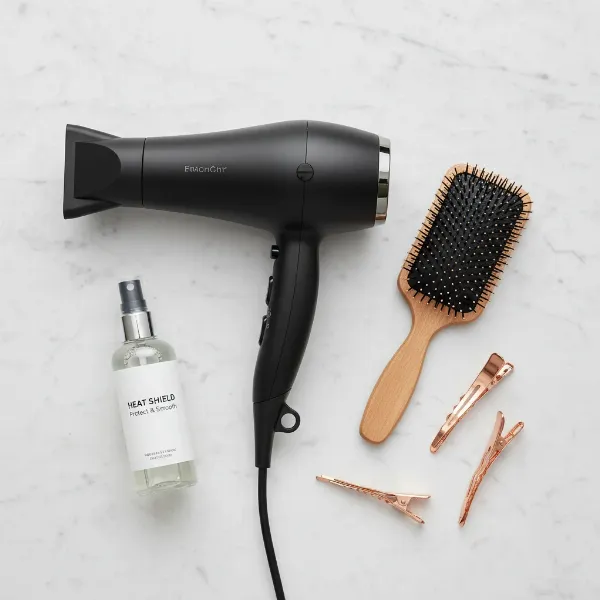 A collection of essential tools for blow drying bangs flat: a hair dryer with a concentrator nozzle, a paddle brush, hair clips, and a heat protectant spray.
Essential Hair Dryer Types and Their Role in Styling Bangs
Choosing the right hair dryer is the first step towards achieving your desired flat bang style. Different technologies offer distinct benefits that can significantly impact the outcome, especially when aiming for smoothness and frizz control. Understanding these types will help you select a dryer that complements your hair type and styling goals.
Ionic Hair Dryers
|
Our Picks for the Best Hair Dryer in 2026
As an Amazon Associate I earn from qualifying purchases.
|
||
| Num | Product | Action |
|---|---|---|
| 1 | Conair Double Ceramic Hair Dryer - Blow Dryer with Ionic Conditioning - Includes Concentrator |

|
| 2 | Wavytalk Hair Dryer with Diffuser, Blown Away Ionic Hair Dryer for Curly Hair with Comb, 1875W Fast Drying Blow Dryer with Ceramic Technology, 3 Attachments for All Hair Types, Light and Quiet, Black |
|
| 3 | Infiniti PRO CONAIR Hair Dryer with Diffuser, Professional AC Motor, Tourmaline Ceramic Technology Blow Dryer, Includes Concentrator and Blowout Brush, Amazon Exclusive, Gray |
|
| 4 | Wavytalk Hair Dryer, Blown Away Ionic Hair Dryer for Curly Hair with Diffuser, 1875W Fast Drying Blow Dryer with Ceramic Technology, 3 Attachments for All Hair Types, Light and Quiet, Rose Gold |
|
| 5 | Wicked Elphaba Hair Dryer with Diffuser from Conair - INFINITIPRO by CONAIR Hair Dryer with Ceramic Technology - Includes Diffuser and Concentrator |
|
| 6 | INFINITI PRO by CONAIR Hair Dryer, 1875W Blow Dryer with Diffuser and Concentrator Attachments, AC Motor with Ceramic Technology, 3 Heat & 2 Speed Settings, Plum |
|
| 7 | Wicked Glinda Hair Dryer with Diffuser from Conair - INFINITIPRO by CONAIR Hair Dryer with Ceramic Technology - Includes Diffuser and Concentrator |
|
| 8 | Conair Double Ceramic Hair Dryer, 1875W Blow Dryer with Diffuser and Concentrator, Ionic Conditioning, 3 Heat & 2 Speed Settings, Amazon Exclusive, White |
|
| 9 | INFINITI PRO by CONAIR Hair Dryer, 1875W Blow Dryer with Diffuser and Concentrator, Ceramic Technology, 3 Heat & 2 Speed Settings, Cold Shot Button, Black |
|
| 10 | Infiniti PRO CONAIR Hair Dryer with Diffuser and Concentrator, 1875W Style & Shine Blow Dryer with Tourmaline and Ionic Conditioning to Fight Frizz, 3 Heat & 2 Speed Settings, Blue |
|
Ionic hair dryers generate negatively charged ions that break down water molecules, allowing hair to dry faster. This process also helps to seal the hair’s cuticle, trapping moisture, enhancing shine, and significantly reducing frizz. For bangs prone to frizz or flyaways, an ionic dryer is a game-changer, leaving them smoother and more manageable.
Ceramic Hair Dryers
Ceramic hair dryers use ceramic components to provide a more even and gentle heat distribution. This prevents hot spots and minimizes heat damage, making them ideal for all hair types, particularly fine or color-treated hair that is more susceptible to damage. The consistent heat helps in smoothing the hair strands without over-drying, which is vital for achieving flat bangs.
Tourmaline Hair Dryers
Tourmaline is a mineral that, when heated, emits a higher concentration of negative ions and far-infrared heat. This means tourmaline dryers dry hair even faster than ceramic or standard ionic models, while also amplifying the frizz-reducing and shine-boosting benefits. If you have thick or coarse bangs that take a long time to dry, a tourmaline dryer can dramatically cut down your styling time.
Cordless Hair Dryers
While not typically used for full blow-drying sessions, cordless hair dryers offer unparalleled mobility for quick touch-ups or styling on the go. Their portability is their main advantage, allowing you to easily refine your bangs or combat humidity-induced kinks throughout the day without being tethered to an outlet.
Key Criteria for Selecting a Hair Dryer for Bang Styling
Beyond the type of technology, several critical features dictate a hair dryer’s effectiveness for styling perfectly flat bangs. Paying attention to these specifications will ensure you invest in a tool that genuinely supports your styling efforts.
Power (Wattage)
A hair dryer’s wattage indicates its motor strength and how quickly it can deliver airflow. For bangs, you don’t necessarily need the highest wattage, but a dryer with sufficient power (typically 1600-1875 watts) will ensure efficient drying without excessive heat exposure. Look for a balance between power and control to avoid over-drying or blowing your short fringe out of place.
Heat Settings
Adjustable heat settings are paramount for protecting your hair’s health. For bangs, which are often styled daily, using a medium or warm heat setting is crucial. High heat can cause damage and make bangs stiff. The cool shot button is also invaluable; it locks your style in place once your bangs are dry, adding a final touch of smoothness and longevity.
Air Speed Settings
Much like heat settings, adjustable air speed provides essential control. Lower speed settings are ideal for fine hair, preventing it from being blown around uncontrollably and allowing for precise styling. Thicker bangs might benefit from a slightly higher speed to penetrate density, but always aim for controlled airflow, especially at the roots.
Technology: Ion, Ceramic, Tourmaline
As discussed, these technologies significantly impact hair health and finish. For flat bangs, ionic, ceramic, or tourmaline properties contribute to a smoother, shinier, and frizz-free result, which is precisely what you need. Prioritize dryers that incorporate at least one of these.
Design and Attachments
A lightweight and ergonomically designed dryer reduces arm fatigue, which is helpful for detailed bang styling. The concentrator nozzle is a non-negotiable attachment for flat bangs. It directs airflow precisely where you need it, focusing heat on the roots to eliminate cowlicks and smooth the hair down without disturbing the rest of your fringe.
Brand Reputation
While personal preference plays a role, reputable brands often invest in better technology, durability, and safety features. Researching user reviews and professional recommendations can guide you towards reliable models known for consistent performance.
Essential Tools for Perfectly Flat Bangs
Having the right equipment is just as important as knowing the right technique. Beyond your hair dryer, a few key styling tools will become your best friends in the pursuit of flawlessly flat bangs.
- Hair Dryer with a Concentrator Nozzle: This is your primary weapon. The nozzle funnels the airflow, allowing for targeted drying and smoothing of specific sections of your bangs, especially at the roots where cowlicks often reside.
- Paddle Brush or Flat Brush: For bangs that need to lay perfectly flat, a paddle brush is indispensable. Its broad, flat surface provides the necessary tension to smooth the hair from root to tip. Brushes with a mix of boar and nylon bristles are particularly effective as they grip the hair gently yet firmly, distributing natural oils for shine while detangling. Avoid medium-sized round brushes if flatness is your goal, as they can inadvertently create volume or “bubble bangs.”
- Heat Protectant Spray: Non-negotiable for daily heat styling. A good heat protectant forms a barrier between your hair and the heat, preventing damage, dryness, and breakage. It also often aids in smoothing and adding shine.
- Hair Clips: These are useful for sectioning off the rest of your hair, ensuring it doesn’t get in the way while you focus solely on your bangs.
- Optional – Flat Iron: For those with particularly stubborn waves, curls, or strong cowlicks, a quick pass with a flat iron on a low setting after blow-drying can provide extra polish and flatness.
- Optional – Dry Shampoo: An excellent product for extending the life of your flat bang style by absorbing excess oil and adding a touch of freshness.
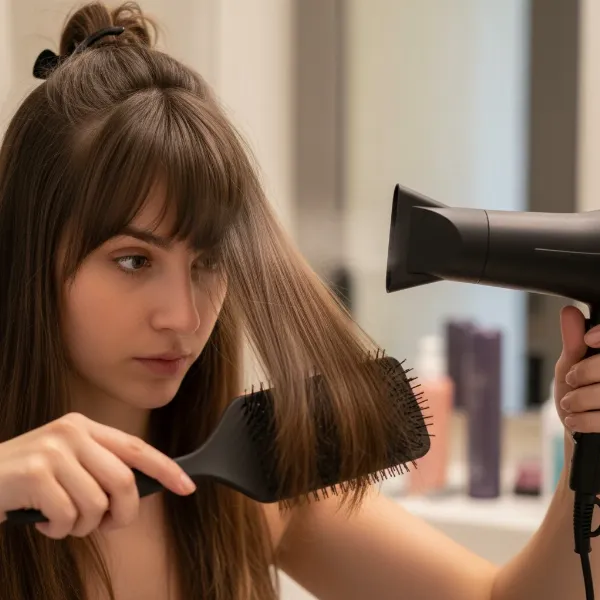 A person demonstrating the side-to-side blow-drying technique for bangs using a paddle brush and hair dryer with a concentrator nozzle, showing focused airflow.
Mastering the Art of Blow Drying Bangs Flat: Step-by-Step Guide
The secret to perfectly flat bangs lies in a specific, deliberate technique that coaxes your hair to lie exactly where you want it. Here’s a detailed step-by-step guide to achieving that sleek, salon-quality finish.
Preparation is Key
Begin with damp, towel-dried bangs. They should be wet enough to be cooperative but not dripping. This is when your hair is most pliable and receptive to styling. Next, apply a dime-sized amount of heat protectant serum or spray evenly through your bangs. This crucial step shields your hair from potential damage and helps create a smooth foundation. Finally, clip the rest of your hair away from your face, isolating your bangs so you can focus entirely on them without interference.
The “Confusion” Technique: Eliminating Cowlicks and Flattening Roots
This method is the cornerstone of achieving perfectly flat bangs and effectively combating stubborn cowlicks. Hold your hair dryer above your head, pointing the concentrator nozzle directly downwards towards your roots. This overhead angle ensures the air flows in the direction you want your bangs to lay, pressing them flat against your forehead.
Now, with your paddle or flat brush, brush your bangs vigorously to one side of your forehead. As you brush, follow the movement with the blow dryer, directing the warm air over the hair as it moves. The tension from the brush combined with the downward airflow is essential here. Continue this for a few seconds, focusing on drying the roots.
Immediately switch directions: brush your bangs with the paddle brush to the opposite side of your forehead, again following with the downward-angled blow dryer. The continuous back-and-forth motion “confuses” the hair roots, preventing them from settling into their natural growth pattern or stubborn cowlicks. Keep repeating this alternating motion until your roots are mostly dry and visibly flattened. For thicker bangs, you might work in smaller sections, gradually moving them across your brow.
Final Smoothing and Setting
Once your roots are dry and the bangs are laying flat, switch to a more direct downward brush. Hold your paddle brush underneath your bangs, right against your roots, and gently pull them straight down while continuing to blow dry downwards over the brush. This final pass ensures the mid-lengths and ends are perfectly smooth and straight. Finish by blasting your bangs with a cool shot of air from your dryer. The cool air helps to set the style and lock in the flatness, preventing them from puffing up later.
Tips for Different Bang Types
- Straight-Across Bangs: Emphasize the side-to-side brushing and direct downward airflow throughout the entire process to maintain a blunt, flat look.
- Thicker Bangs: Divide your bangs into two or three thinner horizontal sections. Work on one section at a time, ensuring each layer is thoroughly dried and flattened before moving to the next.
- Curly or Wavy Bangs: After blow-drying using the “confusion” technique, a quick, gentle pass with a flat iron on a low heat setting can provide extra smoothness and ensure ultimate flatness. Ensure your bangs are 100% dry before using a flat iron.
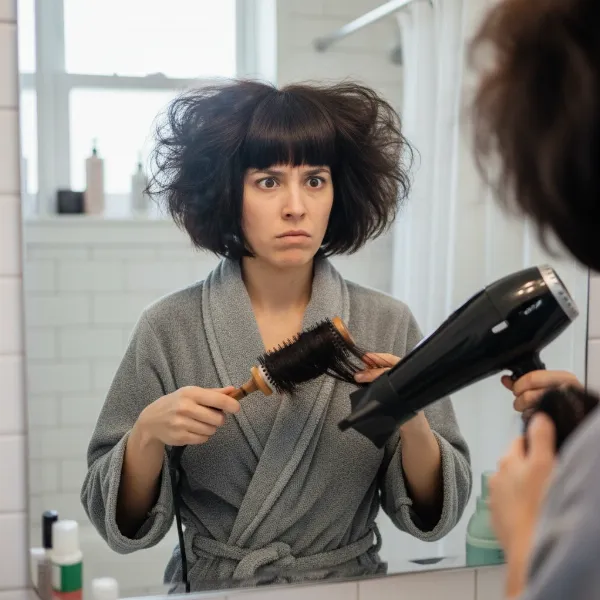 A person looking frustrated at their puffy bangs, while holding a hair dryer, illustrating common styling problems.
Troubleshooting Common Bang Blow-Drying Problems
Even with the best techniques, styling bangs can present challenges. Here’s how to address the most common frustrations to ensure your bangs lay perfectly flat every time.
Puffy or “Bubble” Bangs
The most frequent culprit for puffy bangs is using a round brush or incorrect drying angles. For a flat look, avoid wrapping your bangs around a round brush, which is designed to create volume. Instead, always use a paddle or flat brush and maintain a strictly downward airflow from your hair dryer. Ensure the air pressure is pushing the hair flat against your forehead, rather than lifting it.
Stubborn Cowlicks
Cowlicks are a perennial challenge for bangs, often causing them to spring up or part awkwardly. The “confusion” technique (alternating side-to-side drying) is your most powerful tool here. By repeatedly drying the roots in different directions, you “train” the hair to lie flat, overriding its natural growth pattern. Start this process when your bangs are quite damp, as hair is most pliable then. Applying slightly more tension with your brush at the cowlick area can also help.
Frizz and Flyaways
Frizz is often a sign of insufficient moisture or excessive heat damage. Combat this by always using a high-quality heat protectant and an ionic or tourmaline hair dryer, which emit negative ions to smooth the hair cuticle. If your hair is naturally prone to frizz, consider incorporating an anti-frizz serum or a light styling cream before you begin blow-drying. Ensure your hair is not over-dried; stop when it’s completely dry, then use the cool shot.
Bangs Not Holding Shape
If your bangs fall flat too quickly or lose their style, it usually means the roots weren’t completely dry or the style wasn’t properly set. Ensure you spend enough time drying the roots using the alternating technique until they are thoroughly dry. The cool shot at the end of your blow-dry is critical for setting the hair’s bonds and locking in the flatness. For extra hold, a very light mist of flexible-hold hairspray can be applied from a distance.
Maintaining Your Perfectly Flat Bangs Throughout the Day
Achieving perfectly flat bangs is one thing; keeping them that way all day is another. Environmental factors, natural oils, and even habit can conspire to undo your morning’s work.
Avoid Touching
The most common enemy of perfectly styled bangs is your own hands. Constantly touching, adjusting, or running your fingers through your bangs transfers oils from your skin, which can lead to greasiness and collapse the style. Minimize physical contact as much as possible.
The Power of Dry Shampoo
Dry shampoo is a lifesaver for extending the life of your bangs. A quick spritz at the roots can absorb excess oil, add a bit of texture, and lift them slightly if they start to look limp. Apply it strategically when you feel your bangs might be getting oily, and gently massage it in.
Quick Touch-Ups
For humid days or after a workout, a brief touch-up might be necessary. Keep a travel-sized paddle brush and a small hair dryer (or even just a hand mirror) handy. A quick 30-second re-blow with the side-to-side method, followed by a cool shot, can refresh your bangs instantly. For very stubborn pieces or if you have a compact flat iron, a single, swift pass can smooth out any kinks.
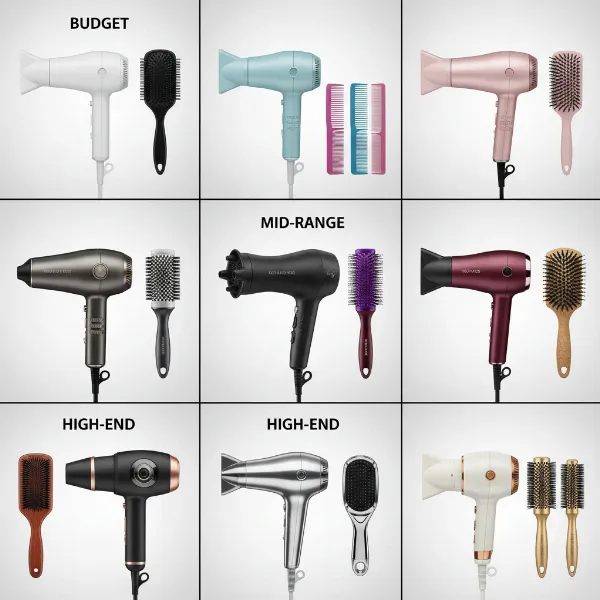 A collage of different hair dryers and brushes, representing various price segments and features, for a buying guide.
Buying Guide: Hair Dryer Price Segments for Optimal Bang Styling
Investing in the right tools is crucial for consistent bang styling. Hair dryers come in various price points, each offering different features and levels of performance suitable for diverse needs and budgets.
Budget-Friendly Hair Dryers (Under $50)
Entry-level hair dryers are accessible and functional, making them a great starting point for beginners or those on a tight budget. They typically offer basic heat and speed settings, often featuring ionic or ceramic technology. While they might lack advanced features or the most powerful motors, many can still achieve good results for flat bangs with the right technique. Look for models that include a concentrator nozzle and multiple heat/speed options.
- Pros: Affordable, easy to find, suitable for basic drying.
- Cons: Less durable, fewer advanced technologies, potentially higher heat damage risk if not used carefully.
- Ideal for: Occasional users, beginners learning styling techniques.
Mid-Range Hair Dryers ($50 – $150)
This segment offers a significant step up in quality and features. Mid-range dryers often boast more powerful DC or AC motors, a wider range of heat and speed settings, and more advanced ionic, ceramic, or tourmaline technologies. They tend to be more durable and provide better performance, leading to faster drying times and smoother results with less frizz. This is often the sweet spot for many home users who style their hair regularly.
- Pros: Good balance of price and performance, more durable, better for hair health, includes essential attachments.
- Cons: Can still be bulky, not as advanced as premium models.
- Ideal for: Regular stylers, those seeking improved results without a premium investment.
High-End/Premium Hair Dryers (Above $150)
Premium hair dryers represent the pinnacle of hair drying technology, offering superior performance, advanced features, and often cutting-edge design. Brands like Dyson and T3 utilize digital motors, intelligent heat control (measuring air temperature hundreds of times per second to prevent damage), and lightweight, ergonomic designs. These dryers offer exceptionally fast drying, minimal heat damage, quiet operation, and are often packed with versatile attachments. While a significant investment, they deliver salon-quality results and are built to last.
- Pros: Fastest drying, least hair damage, quiet operation, highly durable, advanced technology, professional results.
- Cons: High initial cost.
- Ideal for: Professional stylists, hair enthusiasts, those with delicate or damaged hair, anyone seeking the best possible styling experience and results.
Conclusion
Achieving perfectly flat bangs might seem like a daunting task, but with the right knowledge, tools, and a bit of practice, it’s entirely within your reach. Remember to start with damp, protected hair, utilize the “confusion” technique of alternating side-to-side blow-drying to eliminate cowlicks, and always finish with a cool shot to set your style. Choosing a Hair Dryer with appropriate technology and a concentrator nozzle, paired with a reliable paddle brush, forms the foundation of your success. With these expert tips, you can confidently style your bangs flat, sleek, and frizz-free every single day. What are your personal challenges when styling your bangs, and what tips have you found most effective?
Frequently Asked Questions
Can I blow dry my bangs without a brush?
While possible, blow-drying bangs without a brush makes it significantly harder to achieve a perfectly flat, smooth look. A paddle or flat brush provides the necessary tension to guide the hair, smooth the cuticle, and effectively combat cowlicks, leading to a much more polished result than simply using your fingers.
How often should I wash my bangs if I blow dry them daily?
If you blow dry your bangs daily, you might consider washing just your bangs rather than your entire head every day. Bangs tend to get oily faster from contact with skin and styling products. A quick rinse and re-style of just the fringe can keep them fresh without over-washing the rest of your hair.
What’s the difference between a paddle brush and a flat brush for bangs?
A paddle brush and a flat brush are generally terms used interchangeably for a wide, flat-headed brush. Both are excellent for bangs because their large, flat surface provides maximum tension and coverage, allowing you to effectively smooth and flatten the hair from roots to ends without introducing unwanted volume.
How to make my bangs stay flat all day in humid weather?
In humid conditions, a good heat protectant with anti-frizz properties is crucial. Ensure your bangs are completely dry after blow-drying, then set them with a cool shot. A light mist of humidity-resistant hairspray can also create a barrier against moisture. Minimizing touch and carrying dry shampoo for touch-ups will further help.
Is it bad to use a flat iron on my bangs every day?
Using a flat iron daily on bangs can be damaging if not done correctly. Always use a heat protectant, keep the heat setting as low as possible (just enough to achieve the desired effect), and avoid multiple passes over the same section. Prioritize thorough blow-drying, using the flat iron only for quick, light touch-ups if necessary.