Your hair dryer is more than just a styling tool; it’s an essential part of your daily routine, helping you achieve salon-worthy looks and efficient drying. But like any appliance, without proper care, its performance can degrade, leading to frustrating malfunctions and premature replacement. The good news is that extending your hair dryer’s lifespan is often simpler than you think, requiring just a few consistent habits and a little attention. By understanding the common pitfalls and adopting smart maintenance practices, you can keep your trusted hair dryer running smoothly for years, saving you money and ensuring perfect hair days every time.
Why Hair Dryers Fail Prematurely
Many hair dryers meet an early demise, not due to inherent flaws, but from preventable issues. The most common culprit behind a hair dryer’s premature failure is often a clogged air filter, which leads to restricted airflow. This forces the motor to work harder, generating excessive heat that can eventually burn out the motor or heating element. Furthermore, consistent overheating not only damages internal components but can also pose a fire hazard. Power cord damage, frequently caused by improper storage or careless handling, is another leading reason hair dryers stop working. Understanding these primary causes is the first step toward proactive care.
Essential Cleaning Practices for Longevity
Regular cleaning is the cornerstone of hair dryer maintenance, directly impacting its performance and longevity. A clean hair dryer operates more efficiently, provides consistent airflow, and reduces the risk of overheating.
The Critical Role of the Air Filter
|
Our Picks for the Best Hair Dryer in 2026
As an Amazon Associate I earn from qualifying purchases.
|
||
| Num | Product | Action |
|---|---|---|
| 1 | Infiniti PRO CONAIR Hair Dryer with Diffuser and Concentrator, 1875W Style & Shine Blow Dryer with Tourmaline and Ionic Conditioning to Fight Frizz, 3 Heat & 2 Speed Settings, Blue |

|
| 2 | INFINITI PRO by CONAIR Hair Dryer, 1875W Blow Dryer with Diffuser and Concentrator Attachments, AC Motor with Ceramic Technology, 3 Heat & 2 Speed Settings, Plum |
|
| 3 | Wavytalk Hair Dryer with Diffuser, Blown Away Ionic Hair Dryer for Curly Hair with Comb, 1875W Fast Drying Blow Dryer with Ceramic Technology, 3 Attachments for All Hair Types, Light and Quiet, Black |
|
| 4 | INFINITI PRO by CONAIR Hair Dryer, 1875W Blow Dryer with Diffuser and Concentrator, Ceramic Technology, 3 Heat & 2 Speed Settings, Cold Shot Button, Black |
|
| 5 | Infiniti PRO CONAIR Hair Dryer with Diffuser, Professional AC Motor, Tourmaline Ceramic Technology Blow Dryer, Includes Concentrator and Blowout Brush, Amazon Exclusive, Gray |
|
| 6 | Conair Double Ceramic Hair Dryer - Blow Dryer with Ionic Conditioning - Includes Concentrator |
|
| 7 | Wavytalk Hair Dryer, Blown Away Ionic Hair Dryer for Curly Hair with Diffuser, 1875W Fast Drying Blow Dryer with Ceramic Technology, 3 Attachments for All Hair Types, Light and Quiet, Rose Gold |
|
| 8 | Wicked Elphaba Hair Dryer with Diffuser from Conair - INFINITIPRO by CONAIR Hair Dryer with Ceramic Technology - Includes Diffuser and Concentrator |
|
| 9 | Conair Double Ceramic Hair Dryer, 1875W Blow Dryer with Diffuser and Concentrator, Ionic Conditioning, 3 Heat & 2 Speed Settings, Amazon Exclusive, White |
|
| 10 | Wicked Glinda Hair Dryer with Diffuser from Conair - INFINITIPRO by CONAIR Hair Dryer with Ceramic Technology - Includes Diffuser and Concentrator |
|
The air filter, typically located at the back of your hair dryer, is designed to prevent dust, lint, and stray hairs from entering the motor and heating element. When this filter becomes clogged, it obstructs airflow, making the motor overwork and causing the unit to overheat. Cleaning this component regularly can improve airflow by up to 30% and significantly reduce the risk of overheating. Most filters are removable, often requiring a gentle twist or pop to detach. If you’re unsure, consult your dryer’s manual for specific instructions.
Step-by-Step Filter Cleaning
Keeping your filter pristine is a straightforward process. First, always ensure your hair dryer is unplugged and completely cool before beginning any cleaning.
- Remove the Filter Screen: Gently twist or pop off the air intake filter, usually found at the back.
- Dry Cleaning: Use a soft-bristled brush, such as an old toothbrush, or your fingers to gently clear away any accumulated lint, dust, and hair from the filter and vent openings. For stubborn debris, a can of compressed air can effectively blow out particles.
- Wet Cleaning (if applicable): Some filters can be washed with mild soap and warm water for a deeper clean. However, ensure it is completely dry before placing it back in the dryer. Never operate your hair dryer without the filter, as this allows more debris to enter and damage the motor.
- Reassemble: Once clean and dry, reattach the filter securely.
Cleaning the Exterior and Attachments
Beyond the filter, the external body and any attachments also require attention. Wipe down the outer casing with a soft, slightly damp cloth to remove hair product residue and grime. Avoid harsh chemicals or abrasive materials, which can damage the surface. If your dryer has removable nozzles or diffusers, these can be rinsed in warm, soapy water. Always ensure they are thoroughly dry before reattaching to the main unit.
Smart Usage Habits to Preserve Your Dryer
How you use your hair dryer daily plays a significant role in its longevity. Simple adjustments to your routine can prevent undue stress on the internal components.
Heat and Airflow Management
High heat settings, while effective for quick drying, can exponentially degrade internal components over time. Professional stylists often recommend using the lowest effective heat setting for your hair type to extend appliance life. Additionally, limiting continuous use to 5-10 minutes at a time and allowing the dryer to cool down between uses or by using the cold shot button intermittently can give the motor a much-needed breather. Maintaining a distance of 6-8 inches from your hair also helps prevent overheating and component strain.
Avoiding Obstructions
Ensure that the air intake at the back of your hair dryer is never blocked or covered during use. Using your dryer in a well-ventilated area allows for proper heat dispersion, preventing the unit from becoming too hot. Avoid stuffing your dryer into tight drawers or resting it on surfaces that could block the vents while in operation.
Proper Storage and Cord Care
After using your hair dryer, proper storage is crucial for maintaining both the device and its power cord, a common point of failure.
Cooling Down and Storage Location
Always allow your hair dryer to cool completely before storing it. Store it in a cool, dry place, away from direct sunlight and moisture. Damp or cramped spaces can invite damage. Consider using a dedicated storage bag or box to protect it from dust and accidental impacts.
Preventing Cord Damage
The power cord is often subjected to significant stress, leading to fraying, cracks, or exposed wires. Avoid wrapping the cord tightly around the hair dryer, as this can damage the internal wiring over time. Instead, loosely coil the cord and secure it with a twist tie or a cord wrap. Regularly inspect the cord and plug for any signs of wear or damage. If you notice any fraying or exposed wires, discontinue use immediately to prevent electrical hazards and consider professional repair or replacement.
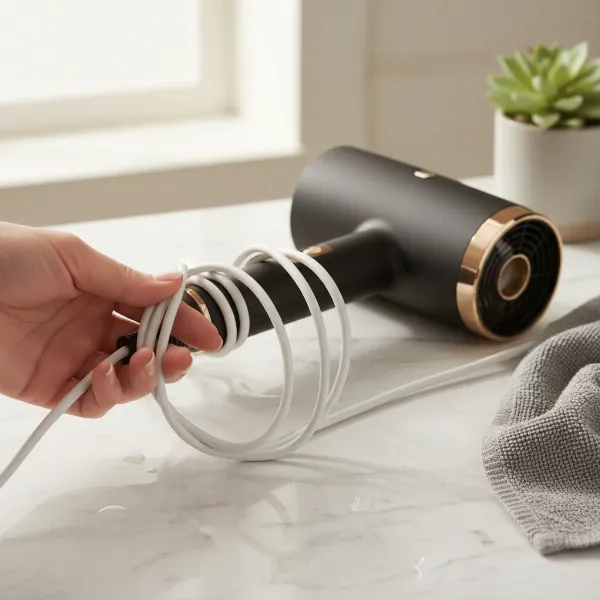 A hand gently coiling a hair dryer cord, avoiding tight wraps, with a hair dryer in the background.
Recognizing Warning Signs and When to Seek Professional Help
Even with the best care, hair dryers can develop issues. Recognizing early warning signs can prevent further damage or safety risks.
Common Malfunctions
Listen for any unusual sounds like rattling, grinding, or excessive loudness, which can indicate internal problems. A distinct burning smell or visible sparks are immediate red flags, signaling electrical issues. If your dryer frequently shuts off during use, it might be a safety feature kicking in due to overheating or an internal fault. A significant drop in performance, such as reduced airflow or less efficient heating, also suggests internal components are struggling.
Professional Intervention
While basic cleaning is DIY-friendly, attempting to fix complex internal issues can be dangerous and may void your warranty. If you encounter serious problems like burning smells, sparks, or consistent performance issues, it’s best to consult a professional. They possess the expertise to safely diagnose and repair internal wiring, heating elements, or motor problems.
Buying Guide: Choosing a Durable Hair Dryer
When it’s time to invest in a new hair dryer, choosing a high-quality, durable model can significantly impact its potential lifespan. While cheaper models might last 2-3 years, professional-grade hair dryers can endure for 6-7 years or even upwards of 10 years with proper care.
Consider these factors:
- Power and Efficiency: Higher wattage typically means quicker drying and less strain on the motor during use.
- Heat and Speed Control: Multiple adjustable settings allow you to use the lowest effective heat, reducing wear on components and protecting your hair.
- Comfort and Ergonomics: A lightweight, well-designed dryer reduces hand fatigue, encouraging careful handling and use.
- Durability and Brand Reputation: Opt for established brands with positive user reviews, signaling a commitment to quality and longevity.
Conclusion
Extending the lifespan of your hair dryer doesn’t require complex procedures, but rather consistent, mindful care. By regularly cleaning the air filter, adopting smart usage habits like managing heat and taking breaks, ensuring proper storage, and diligently caring for the power cord, you can significantly prolong your appliance’s life. Recognizing the subtle warning signs and knowing when to seek professional help are also crucial steps in preventing small issues from becoming costly replacements. Embracing these maintenance practices not only saves you money in the long run but also contributes to a more sustainable approach to your beauty tools, ensuring your hair dryer remains a reliable partner for many years to come. What simple change will you make today to give your hair dryer a longer, healthier life?
Frequently Asked Questions
How often should I clean my hair dryer filter?
For daily users, a thorough cleaning once a week is recommended, especially if you have thick or curly hair and use styling products. Occasional users can typically get by with cleaning once a month. Regular cleaning prevents lint and dust buildup that can restrict airflow and cause overheating.
Can I use water to clean the entire hair dryer?
No, you should never immerse the main unit of your hair dryer in water, as this can damage internal electrical components and create a significant safety hazard. Only removable attachments like nozzles and diffusers can be safely rinsed with mild soap and warm water, but ensure they are completely dry before reattaching.
Why does my hair dryer sometimes emit a burning smell?
A burning smell typically indicates that dust, lint, or hair particles have accumulated inside the dryer and are burning due to high heat. This is often a sign of a clogged filter or internal components overheating. Immediately unplug the dryer and clean the air filter to address this issue.
Can a dirty hair dryer damage my hair?
Yes, a dirty hair dryer with restricted airflow can lead to uneven heat distribution and force the dryer to work harder, potentially causing it to overheat. This inconsistent and excessive heat can lead to more hair damage, frizz, and dryness over time, negating the benefits of proper drying.
What’s a quick daily tip to keep my hair dryer running smoothly?
After each use, unplug your Hair Dryer and allow it to cool down completely before storing it in a dry, ventilated spot. Also, quickly flick away any loose hair strands caught in the vent to prevent immediate buildup. These small habits significantly contribute to its longevity.