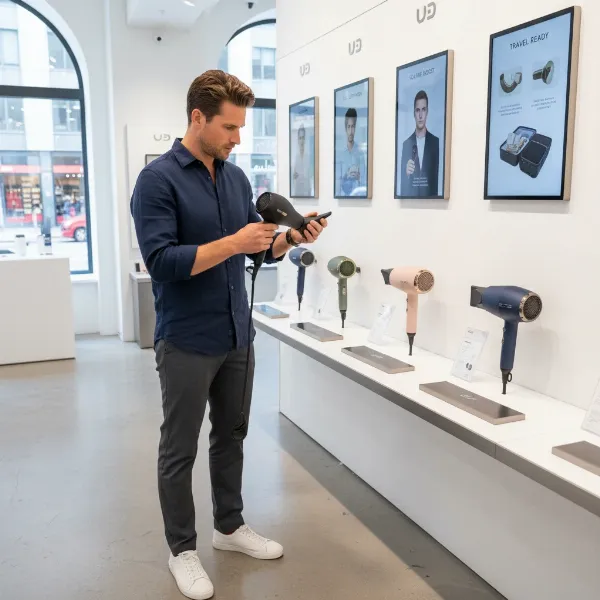
For centuries, achieving perfectly styled, dry hair was often a lengthy and challenging endeavor. From rudimentary air-drying methods to cumbersome early inventions, the journey to the sleek, efficient hair dryer we know today is a fascinating tale of innovation, necessity, and evolving beauty standards. Understanding the origins of this ubiquitous styling tool reveals not just technological advancements, but also the societal shifts that embraced convenience and personal grooming. Let’s explore the pivotal moments that transformed hair drying from a laborious chore into an effortless daily ritual.
From Ancient Practices to Modern Marvels: The Evolution of Hair Drying
Before the advent of modern technology, individuals often resorted to natural or rudimentary methods to dry their hair. Sun exposure, towel blotting, and even sitting by a warm fire were common practices, albeit time-consuming and often inefficient. Some resourceful individuals in the early 20th century even attached hoses to the exhaust ends of vacuum cleaners to blow-dry their hair, highlighting the significant need for a dedicated drying solution.
The Dawn of Mechanical Drying: Late 19th Century Inventions
The late 19th century marked a pivotal moment in hair care history with the first significant step toward mechanical drying. It was in 1890 that French stylist Alexandre F. Godefroy unveiled his groundbreaking invention: a large, stationary hooded dryer designed for use in his salon. This pioneering device consisted of a bonnet connected to the chimney pipe of a gas stove, allowing clients to sit underneath while warm air circulated to dry their hair. While revolutionary for its time, Godefroy’s creation was far from portable, large, and certainly not an item for household use.
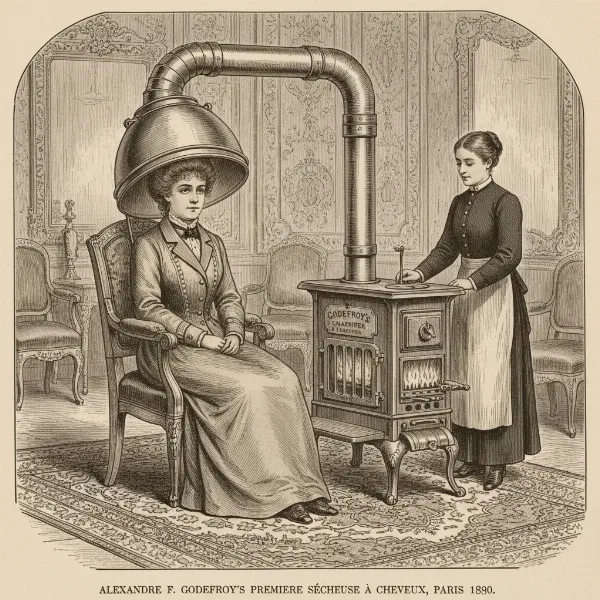 Alexandre F. Godefroy's 1890 salon hooded hair dryer connected to a gas stove chimney pipe.
The Handheld Revolution: Early 20th Century Innovations
The true game-changer for personal hair care arrived around 1915-1920 with the introduction of the first handheld hair dryers. Inventors like Gabriel Kazanjian, who patented a hair dryer in the United States in 1911, contributed to this shift towards portability. Early manufacturers, including National Stamping and Electric Works (under the White Cross brand), U.S. Racine Universal Motor Company, and Hamilton Beach Co., were instrumental in bringing these more compact devices to market.
However, these early handheld models presented numerous challenges. They were notably heavy, often weighing around two pounds, making them cumbersome and difficult to maneuver for extended periods. Their power output was minimal, typically around 100 watts (a stark contrast to today’s 2000-watt models), resulting in painfully slow drying times. More alarmingly, safety was a major concern, with frequent reports of overheating and even electrocution, making them a risky styling choice.
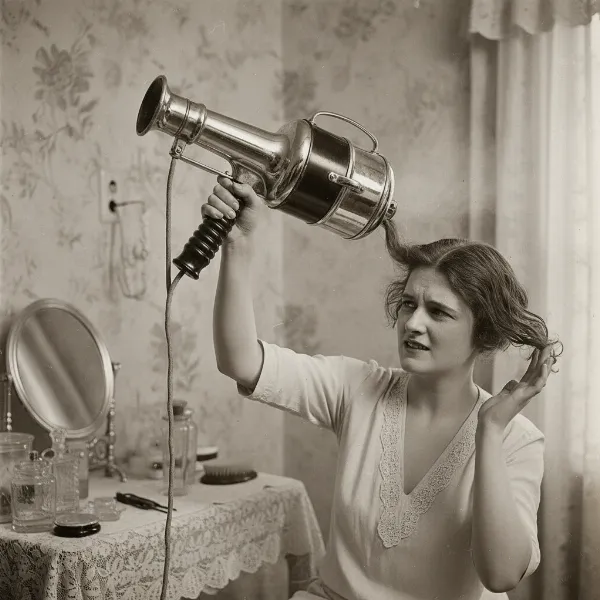 Early 20th century heavy, low-wattage handheld hair dryer being used with visible difficulty.
Post-War Progress and the Plastic Age: Mid-20th Century
The mid-20th century ushered in a new era for hair dryers, marked by significant improvements in design and accessibility. The period following World War II saw increased mass production and a growing market for consumer appliances. By the 1950s, motors became considerably more powerful, and the materials used in construction grew lighter, paving the way for more compact and user-friendly models.
The 1960s were particularly transformative with the widespread adoption of plastic as a primary material. This innovation, coupled with the development of better electrical motors, drastically reduced the weight of handheld dryers, making them more comfortable to hold and far safer to operate. This era saw a surge in the popularity of handheld dryers, as they became more affordable and practical for everyday household use. By the 1970s, handheld models had advanced sufficiently in aesthetics, power, and safety to become a viable and often preferred alternative to the larger, salon-style hooded dryers.
The Rise of Advanced Technologies: Late 20th Century to Present
The late 20th century and early 21st century have been defined by a relentless pursuit of efficiency, speed, and hair health. Manufacturers began integrating sophisticated technologies into hair dryers to enhance performance and minimize damage.
- Ionic Technology: Introduced to reduce static electricity and frizz by emitting negatively charged ions, which break down water molecules quickly, leading to smoother, shinier hair.
- Ceramic and Tourmaline Technologies: Ceramic elements provide even heat distribution and instant heat-up times, while tourmaline, a crushed mineral, amplifies the effects of ionic technology, further reducing drying time and static for a healthier finish. These materials aim to protect hair from excessive heat exposure.
- Ergonomics and Design: Modern hair dryers prioritize user comfort with lightweight designs, quieter motors, and sleek aesthetics.
- Cordless and Smart Hair Dryers: Recent innovations include battery-powered cordless options for ultimate portability and “smart” dryers that adjust heat and airflow based on hair type and distance, representing the cutting edge of hair drying technology.
These advancements reflect a continuous effort to provide users with tools that not only dry hair quickly but also maintain its health and enhance its style.
Key Milestones in Hair Dryer Development
| Year | Event | Impact |
|---|---|---|
| 1890 | Alexandre Godefroy invents the first hooded hair dryer | First mechanical hair drying device for salon use. |
| 1911 | Gabriel Kazanjian patents the first U.S. hair dryer | Paved the way for commercial production. |
| 1915-1920 | First handheld hair dryers appear | Enabled personal, at-home hair drying, despite early limitations. |
| 1950s | Motors become more powerful; materials get lighter | Increased efficiency and user comfort. |
| 1960s | Introduction of plastics; improved motors | Dramatically reduced weight, enhanced safety, widespread adoption. |
| 1970s | Handheld dryers become a dominant choice | Established handheld dryers as a viable and popular alternative. |
| Late 20th C. | Ionic, Ceramic, and Tourmaline technologies introduced | Focus shifted to hair health, reduced frizz, faster drying, and shine. |
| Present | Cordless and smart hair dryers emerge | Emphasis on portability, personalized drying, and advanced controls. |
The Impact of Hair Dryers on Society and Fashion
The evolution of the hair dryer has profoundly influenced hairstyling trends and societal norms. Early models, though primitive, liberated individuals from lengthy air-drying, allowing for more structured and elaborate hairstyles that required precise shaping and setting. As handheld dryers became safer and more accessible, they democratized hairstyling, enabling countless individuals to achieve salon-quality looks at home. This shift empowered people to experiment with diverse styles, contributing to the ever-changing landscape of fashion and personal expression. The hair dryer became more than just an appliance; it became a tool for self-expression and confidence.
Conclusion
The journey of the hair dryer, from its bulky, gas-powered origins to today’s sleek, technologically advanced marvels, is a testament to human ingenuity. This essential styling tool has evolved dramatically over the past century, driven by a continuous desire for efficiency, safety, and superior hair care. As we look ahead, the future promises even more sophisticated solutions, integrating artificial intelligence and sustainable design to further enhance our daily styling routines. What innovations do you think will define the next chapter in hair dryer history?
Frequently Asked Questions
Who invented the first hair dryer and when?
The first mechanical hair dryer was invented by French stylist Alexandre F. Godefroy in 1890. It was a large, hooded device used in his salon, connected to a gas stove to provide warm air for drying hair.
What were early handheld hair dryers like?
Early handheld hair dryers, introduced around 1915-1920, were typically heavy, weighing about two pounds, and had low wattage (around 100 watts), making them slow and cumbersome. They also posed significant safety risks due to overheating and potential electrocution.
How did the introduction of plastic impact hair dryer design?
The use of plastic, especially from the 1960s onwards, revolutionized hair dryer design by significantly reducing their weight. This made handheld dryers more comfortable to use, improved safety, and contributed to their widespread adoption in households.
What are ionic, ceramic, and tourmaline technologies in hair dryers?
These are modern advancements focused on hair health. Ionic technology reduces static and frizz, ceramic provides even heat distribution, and tourmaline amplifies ionic effects, all contributing to faster drying, smoother hair, and reduced damage.
How have hair dryers influenced fashion and hairstyling?
Hair Dryers have dramatically influenced fashion by enabling a wider range of styled looks, moving beyond simple air-dried hair. They empowered individuals to create elaborate or desired hairstyles at home, contributing to diverse trends and personal expression throughout the decades.